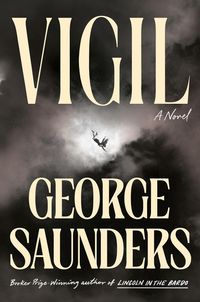
George Saunders’s novel Vigil centers on Jill “Doll” Blaine, a woman who died tragically in her early twenties during the 1970s and now serves as an ethereal death doula. Operating in a liminal, afterlife space reminiscent of Saunders’s Booker Prize-winning Lincoln in the Bardo , Jill’s spiritual assignment is to plummet to Earth and provide profound comfort to souls in their final, earthly hours. Having successfully ushered 343 souls into the next realm by absorbing their pain and easing their...
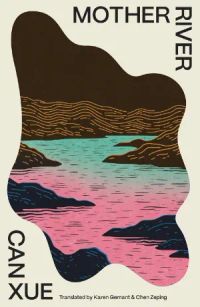
Currently reading. The 13 stories are: Mother River Stone Village Smog City The Drummer Boy The Neighborhood The Young Man Who Loved to Think Deeply Something to Do with Poetry The Inside Story The Lion King At the Edge of the Marsh Night in Xishuangbanna The Goddess of Xishuangbanna Love in Xishuangbanna
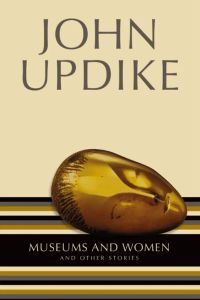
Museums and Women and other stories caught my eye recently because it’s a) on a bookshelf currently in view and b) I haven’t read any Updike for about 30 years. I think the last book of his was either his epistolary novel, S. , or Roger’s Version . However, the first time I encountered Updike was in a university course blandly called Arts and Literature, and the story “Museums and Women” was on the syllabus and handed out on photocopied...
Larry Levis brings raw emotion to his poetry; “To a Wall of Flame in a Steel Mill, Syracuse, New York, 1969” goes from zero to sixty in 3 seconds. Weather and the elements seem to have an agency of their own. We’re buffeted from cold blasts on a farm to an smelting plant somewhere, with blasts from a furnace rendering iron into molten goo. I linger on the wall of flame he saw as he ponder’s his father’s hatred of...
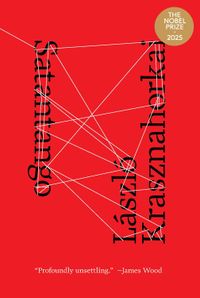
László Krasznahorkai’s Satantango is a bleak, labyrinthine masterpiece that captures the slow-motion collapse of a Hungarian collective farm. The novel is set in a desolate, rain-slicked landscape where the inhabitants are trapped in a state of perpetual decay, waiting for a miracle or a catastrophe. This sense of paralysis and the impending arrival of a “messiah” immediately evokes the shadow of Samuel Beckett. Much like Waiting for Godot , the villagers are suspended in an existential void, though Krasznahorkai twists...
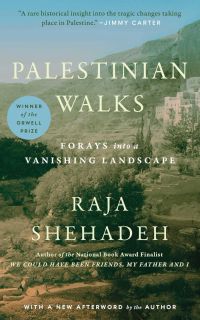
Raja Shehadeh’s Palestinian Walks is a series of reflective essays about moving through the landscapes of the West Bank and Gaza region, where walking becomes both a practical act and a way of thinking. Rather than writing conventional travel reportage, Shehadeh treats the route itself as a narrative device—using roads, paths, hills, fields, and ruins to explore how everyday geography is shaped by politics, memory, and loss. The book’s atmosphere is quiet and observant, with the ordinary details of terrain...
Translated by Coleman Barks This being human is a guest house. Every morning a new arrival. A joy, a depression, a meanness, some momentary awareness comes as an unexpected visitor. Welcome and entertain them all! Even if they’re a crowd of sorrows, who violently sweep your house empty of its furniture, still, treat each guest honorably. He may be clearing you out for some new delight. The dark thought, the shame, the malice, meet them at the door laughing, and...
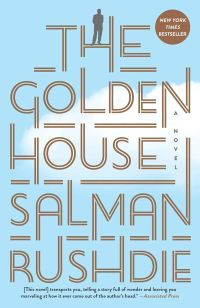
In the humid, over-ripened air of a post-Obama Manhattan, where the sunlight hits the brownstones of Greenwich Village with a cloying, amber insistence, we find the “Gardens”—a private enclave of old-world quietude suddenly invaded by the operatic. Nero Golden, a man of heavy, sepia-toned secrets and a girth that suggests a kingdom lost or perhaps merely packed into high-end luggage, arrives with his three sons like refugees from a myth that has lost its footing. They have shed their Indian...
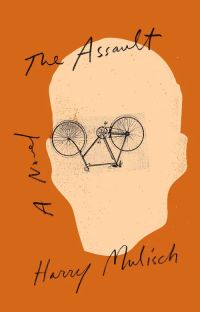
A truly remarkable novel that begins with a tragic turn of events for the Steenwijk family, who live on a street of four houses on a quay in Haarlem (The Netherlands). Gunshots ring out, a man falls off a bike, someone drags the corpse from the front of one household to the front of the Steenwijk’s household, all as the Steenwijks look on in horror. The time is near the end of WWII, but the Gestapo are still very much...
Matsuo Bashō’s The Narrow Road to the Deep North (Oku no Hosomichi) is a poetic travel narrative recounting his 1689 journey from Edo (modern Tokyo) into Japan’s remote northern interior. Written in a refined blend of prose and haiku known as haibun, the work records not only the physical stages of his journey but also a spiritual pilgrimage shaped by Zen Buddhism, literary memory, and a deep sensitivity to impermanence. Though the narrative is relatively brief, it distills vast emotional...
It’s all spoilers below, so get the book and read it. I found it engaging, though I have a bit of trouble with the premise some back of the book blurb makes about ‘readers worldwide’ are coming to a new appreciation of this book. William Stoner feels stuck on a family farm, performing the same chores day-in-day-out. Perhaps his parents pick up on this and decide to send him to university to pursue a course in agriculture, which he gladly...
The story unfolds in the Wiltshire countryside, where the protagonist rents a modest cottage on the grounds of a decaying manor estate owned by a reclusive landlord named Mr. Phillips. This setting becomes a microcosm for broader themes. The narrator, a thinly veiled version of Naipaul, recovering from illness and the exhaustion of his earlier travels, immerses himself in the rhythms of rural life. He observes the changing seasons, the estate’s crumbling grandeur, and the lives of its inhabitants: the...
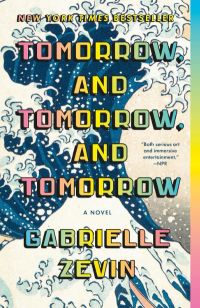
A friend’s daughter was assigned this book in class (high school) and she recommended it highly, so I figured, ok, I know she’s a bright young woman with a dad with good taste in friends, so I read the first free chapters and was hooked. First, it’s about the gaming industry, second it’s about young entrepreneurs, third it’s about friendship, fourth it has allegorical underpinnings from a certain Greek epic, fifth, it touches on many contemporary hot-button political issues regarding...
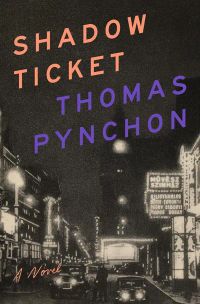
Pynchon’s Shadow Ticket arrives like a cipher slipped under the door of contemporary America. The milieu of the novel is Milwaukee in the 1930s: Prohibition in the states, the Depression, and a tilt toward fascism gripping the world. Later, the action will move to Europe—specifically, Budapest. Hicks McTaggart is a former strike-buster who became a private eye in the employ of Unamalgamated Investigations. His boss is Boynt Crosstown. One day, a new case arrives, and Hicks is assigned to it:...
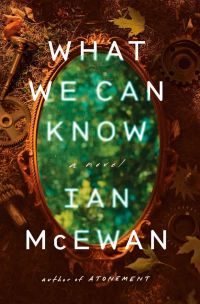
The thematic core of the novel interrogates the limits of knowledge and memory. Through Metcalfe’s pursuit to uncover the missing poem, McEwan delves into complex discussions on historical context, interpretation, and speculation. The characters grapple with the realization that much of what they perceive as “known” is inherently colored by their experiences and biases. The question posed by the novel’s title—“What can we know?”—echoes throughout as Metcalfe attempts to reconstruct not only the events surrounding the poem but also the...
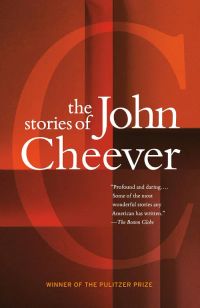
The Swimmer is John Cheever’s best known story, and probably as anthologized as Fitzgerald’s The Diamond as Big as the Ritz or Updike’s A & P . Ned Merrill is at a party and suddenly envisions himself as a great man about to embark on a swim across the county by way of backyard pools in a tony suburban New York State community. He thinks of all of the family pools he’d have to navigate, and without any announcement, he,...
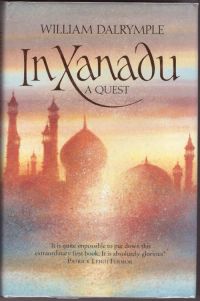
A travel adventure to commemorate Marco Polo’s journey along the Silk Road, Scottish historian (Cambridge student at the time he took this journey), William Dalrymple, uses older historic narratives and maps to help guide him and fellow travelers from the Holy Land to Xanadu (Shan-tu, just north of Beijing). William’s companion traveler for the first half of his journey (until Lahore) is Laura. She is determined to stay on a tight schedule to ensure she meets her obligations and arrives...
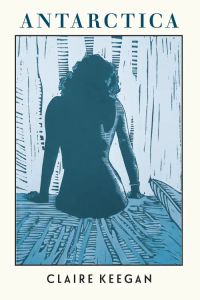
Antarctica is Claire Keegan’s first collection of short stories. I separate these very well-written stories into the following categories: dark, sad or scary. Many stories take place during the winter months or have some aspect of cold about them. Most stories deal with marginalized families or persons, mostly poor and rural. I read all of the stories twice.
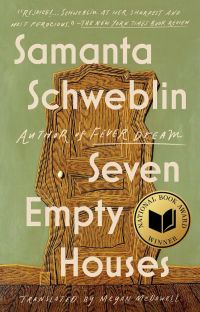
The seven stories and seven houses, as in Samanta Schweblin’s short story collection’s title, are likely linked, though on my first reading, I’m not inclined to make more than that surface connection. Schweblin, an Argentinian writer, has written the finest story I’ve yet read about someone experiencing dementia. Her method puts us in a position of some confusion with shifting inner thoughts of the protagonist, and repetitions of various memories, notes and labels on various items, so it takes a...
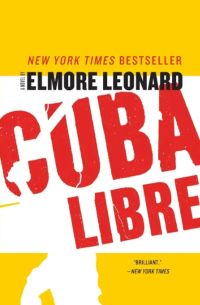
Leonard made extensive use of research and a researcher named Gregg Sutter for many of his novels, and Cubra Libre seems to be one of the more exhaustively researched and well-penned (he never used a computer or word processor, and rarely a typewriter) books in his oeuvre. Leonard, who began as a writer of westerns, then turned to city crime books, is back in semi-familiar territory in this book with a cowboy protagonist (Tyler) running horses to Cuba. The plan...
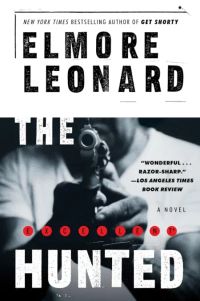
Elmore Leonard is a guilty pleasure of mine. I read far more of his works than I note on this blog, but the simple matter is: I should note them. In The Hunted we find Al Rosen living the good life in Israel, where the State Department relocated him in the witness protection program. Rosen wore a wire to snare two other baddies, but the grand jury didn’t indict them. Al knew those guys were going to come after him,...
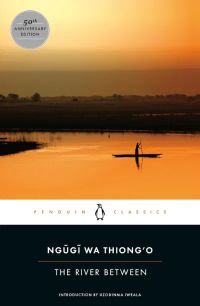
A wake-up book for the study of post-colonialism in Africa and a spark point for outrage by public intellectuals like Christopher Hitchens from what was made known to the world (female genital mutilation). It will challenge anyone’s worldview and where they sit on the moral relativist scale. The choice presented in this novel between the Christian missionaries and indigenous tribal rights is impossible. A young man of the Gikuyu tribe named Waiyaki is the focal point in Thiong’o’s novel. At...
This is a great book to own in its physical form, as numerous photos are interspersed throughout the essays on the natural beauty of Japan’s Kii Peninsula and its disappearing villages and life. A map plots Mod’s route along the eastern coastline, through once-thriving villages, many now reduced in many areas to a few kissas (akin to diners, though much smaller and offering a far sparser menu than their counterparts in, say, New Jersey), some ryokans here and there, and...
So now, halfway through Speedboat, and past the Speedboat “chapter” (it’s a novel), I think it’s growing on me. I’m writing this review in two halves to see if I can make a guess about its structure. The main character, the narrator, is a journalist named Jen Fain, who was born sometime after WWII. Each section has a title that connects tangentially with the various smaller stories (sometimes just a sentence or two) contained in it. The writing is absorbing...
An important theme of T.S. Eliot’s Four Quartets is how we interpret what is handed down through tradition. In his early essay, “Tradition and the Individual Talent” (1919), he touches on this dynamism of how tradition becomes redefined with every new giant talent using a metaphor drawn from science. Twenty-odd years later, a series of four larger poems (each a quartet) emerged somewhat wider in scope than “The Wasteland” and more sophisticated: Burnt Norton (1936) East Coker (1939) The Dry...
M31 is the oddest book I’ve read in a while, and for that, I am grateful. At the outset, a family living in a transformed clapboard church in disrepair watches on eagerly as they view lights approaching from afar. Given the title of the book, we guess that this is perhaps a sighting of a UFO. However, it turns out to be a couple of like-minded people who have had the UFO experience of being ‘taken aboard a ship and...
Christopher Hitchens reflects on his upbringing, the influences that shaped him, and the philosophical foundations of his worldview. The memoir serves as both a personal narrative and a broader commentary on culture, politics, and belief. One of the book’s strengths is Hitchens’ engaging writing style. His eloquence and command of language draw readers in, making complex ideas accessible. His vivid storytelling, combined with sharp wit and humor, keeps the narrative lively and compelling. We are treated to a rich tapestry...
Quicksand is a silkily nuanced novel of erotic gamesmanship and obsession. Sonoko Kakiuchi, an Osaka lady of a good family, married to a dully respected lawyer, tells a story of temptation and betrayal. Sonoko is infatuated with the beautiful art student and femme fatale Mitsuko, a woman so seductive and heartless she can even turn Sonoko’s husband into her own accomplice. Filled with intrigue and treacherous romance, I was entranced by this, Tanizaki’s first novel. The writing is extremely engaging...
Leo Tolstoy’s The Kreutzer Sonata is not only a profound exploration of marriage, jealousy, and the destructive power of unchecked desire but also a deeply personal work that reflects Tolstoy’s struggles and philosophical evolution. Framed as a conversation overheard on a train, the novella centers on the confession of Pozdnyshev, a man who recounts the tragic unraveling of his life and marriage. His story serves as a critique of societal norms, particularly those surrounding relationships, sexuality, and the institution of...
The War Against Cliché by Martin Amis is a collection of essays that delve into the intricacies of literature, focusing on the importance of originality and the pitfalls of cliché. Amis critiques the tendency of contemporary writers to rely on worn-out phrases and familiar tropes, arguing that such reliance undermines the power and clarity of their work. He advocates for a commitment to fresh expression, emphasizing that true literary artistry demands innovation and a willingness to challenge conventional norms. In...