Hong Kong Book Club

For us to keep track of what we've read and are reading.

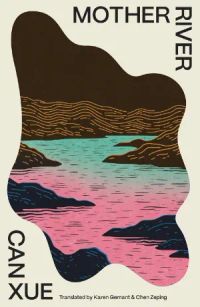
Mother River

Currently reading. The 13 stories are: Mother River Stone Village Smog City The Drummer Boy The Neighborhood The Young Man Who Loved to Think Deeply Something to Do with Poetry The Inside Story The Lion King At the Edge of the Marsh Night in Xishuangbanna The Goddess of Xishuangbanna Love in Xishuangbanna

Read more →

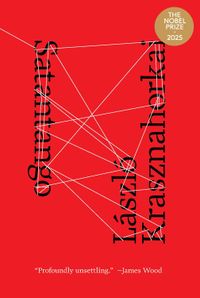
Satantango

László Krasznahorkai’s Satantango is a bleak, labyrinthine masterpiece that captures the slow-motion collapse of a Hungarian collective farm. The novel is set in a desolate, rain-slicked landscape where the inhabitants are trapped in a state of perpetual decay, waiting for a miracle or a catastrophe. This sense of paralysis and the impending arrival of a “messiah” immediately evokes the shadow of Samuel Beckett. Much like Waiting for Godot , the villagers are suspended in an existential void, though Krasznahorkai twists...

Read more →

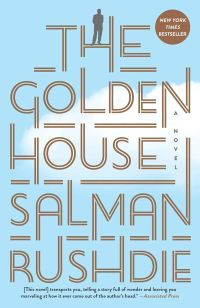
The Golden House

In the humid, over-ripened air of a post-Obama Manhattan, where the sunlight hits the brownstones of Greenwich Village with a cloying, amber insistence, we find the “Gardens”—a private enclave of old-world quietude suddenly invaded by the operatic. Nero Golden, a man of heavy, sepia-toned secrets and a girth that suggests a kingdom lost or perhaps merely packed into high-end luggage, arrives with his three sons like refugees from a myth that has lost its footing. They have shed their Indian...

Read more →

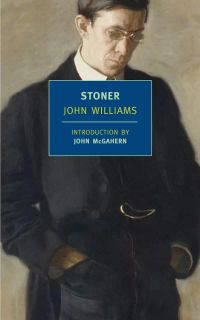
Stoner

It’s all spoilers below, so get the book and read it. I found it engaging, though I have a bit of trouble with the premise some back of the book blurb makes about ‘readers worldwide’ are coming to a new appreciation of this book. William Stoner feels stuck on a family farm, performing the same chores day-in-day-out. Perhaps his parents pick up on this and decide to send him to university to pursue a course in agriculture, which he gladly...

Read more →

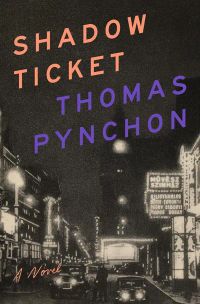
Shadow Ticket

Pynchon’s Shadow Ticket arrives like a cipher slipped under the door of contemporary America. The milieu of the novel is Milwaukee in the 1930s: Prohibition in the states, the Depression, and a tilt toward fascism gripping the world. Later, the action will move to Europe—specifically, Budapest. Hicks McTaggart is a former strike-buster who became a private eye in the employ of Unamalgamated Investigations. His boss is Boynt Crosstown. One day, a new case arrives, and Hicks is assigned to it:...

Read more →

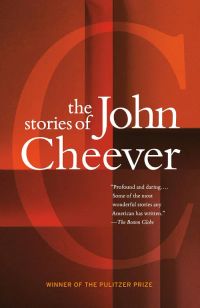
The Swimmer

The Swimmer is John Cheever’s best known story, and probably as anthologized as Fitzgerald’s The Diamond as Big as the Ritz or Updike’s A & P . Ned Merrill is at a party and suddenly envisions himself as a great man about to embark on a swim across the county by way of backyard pools in a tony suburban New York State community. He thinks of all of the family pools he’d have to navigate, and without any announcement, he,...

Read more →

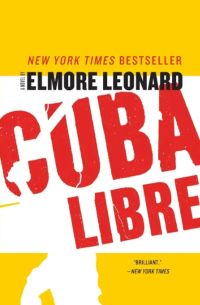
Cuba Libre

Leonard made extensive use of research and a researcher named Gregg Sutter for many of his novels, and Cubra Libre seems to be one of the more exhaustively researched and well-penned (he never used a computer or word processor, and rarely a typewriter) books in his oeuvre. Leonard, who began as a writer of westerns, then turned to city crime books, is back in semi-familiar territory in this book with a cowboy protagonist (Tyler) running horses to Cuba. The plan...

Read more →

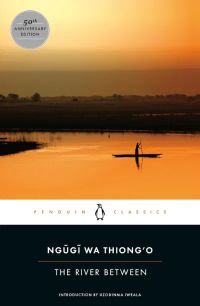
The River Between

A wake-up book for the study of post-colonialism in Africa and a spark point for outrage by public intellectuals like Christopher Hitchens from what was made known to the world (female genital mutilation). It will challenge anyone’s worldview and where they sit on the moral relativist scale. The choice presented in this novel between the Christian missionaries and indigenous tribal rights is impossible. A young man of the Gikuyu tribe named Waiyaki is the focal point in Thiong’o’s novel. At...

Read more →

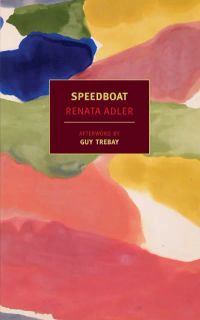
Speedboat

So now, halfway through Speedboat, and past the Speedboat “chapter” (it’s a novel), I think it’s growing on me. I’m writing this review in two halves to see if I can make a guess about its structure. The main character, the narrator, is a journalist named Jen Fain, who was born sometime after WWII. Each section has a title that connects tangentially with the various smaller stories (sometimes just a sentence or two) contained in it. The writing is absorbing...

Read more →

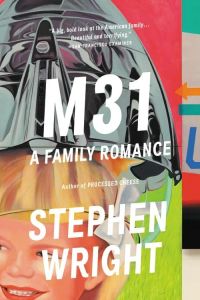
M31

M31 is the oddest book I’ve read in a while, and for that, I am grateful. At the outset, a family living in a transformed clapboard church in disrepair watches on eagerly as they view lights approaching from afar. Given the title of the book, we guess that this is perhaps a sighting of a UFO. However, it turns out to be a couple of like-minded people who have had the UFO experience of being ‘taken aboard a ship and...

Read more →

The Kreutzer Sonata

Leo Tolstoy’s The Kreutzer Sonata is not only a profound exploration of marriage, jealousy, and the destructive power of unchecked desire but also a deeply personal work that reflects Tolstoy’s struggles and philosophical evolution. Framed as a conversation overheard on a train, the novella centers on the confession of Pozdnyshev, a man who recounts the tragic unraveling of his life and marriage. His story serves as a critique of societal norms, particularly those surrounding relationships, sexuality, and the institution of...

Read more →

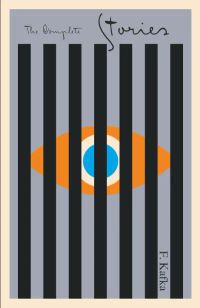
Josephine the Singer

“Josephine the Singer, or the Mouse Folk” is a poignant short story by Franz Kafka that centers on Josephine, a mouse celebrated for her singing talent. Within the community of the Mouse Folk, her performances are seen as a source of joy and unity, yet they also reveal deeper themes of identity, art, and existential struggle. The story is narrated by another mouse, who reflects on Josephine’s significance within their society. He admires her talent but also feels compelled to...

Read more →

The Map and the Territory

The pretentiousness of the contemporary art world is just one of the targets in Michel Houellebecq’s The Map and the Territory. The protagonist, Jed Martin, is a talented painter and photographer who rises to fame in the art world, which he is largely indifferent to. He initially gains recognition for his artistic yet simple photographs of everyday objects. One day, he looks at a Michelin map and finds beauty in it. At an early exhibition of his works, he includes...

Read more →

The Festival of Insignificance

Milan Kundera’s The Festival of Insignificance centers around four main characters: Alain, a laid-back and somewhat indifferent man; his friend Ramon, a lively and passionate individual; the enigmatic and beautiful Clara; and the reflective and thoughtful character, the narrator, who reflects on the nature of their lives and relationships. Set against the backdrop of Paris, the characters navigate their day-to-day experiences, grappling with the superficiality and fleeting nature of modern life. Kundera introduces the notion of insignificance as a central...

Read more →

Hunter of Stories

By Uruguayan writer Eduardo Galeano and published posthumously, Hunter of Stories offers glimpses into hidden histories, mythologies, and the untold crimes inflicted on indigenous peoples by European explorers and later by large nation-states seeking to exploit the natural resources and workers. Galeano’s idealism comes through even as he retells hard histories in one- or two-page-long chapters. As he notes in one of the stories, “Why not write the big story of the past by telling the little one?” Two samples,...

Read more →

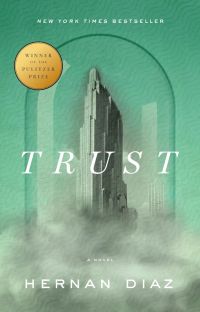
Trust

Hernan Diaz’s novel Trust intricately weaves multiple narratives to explore themes of wealth, power, and the nature of truth. A tale that revolves around a wealthy financier, Benjamin Rask, and his enigmatic wife, Helen. The novel is structured in four parts: two contrasting narratives about Benjamin and Helen, a fictional biography, and an account of their financial dealings. As the characters’ perspectives unfold, the reader encounters differing accounts of their lives and relationships, prompting questions about the reliability of storytelling...

Read more →

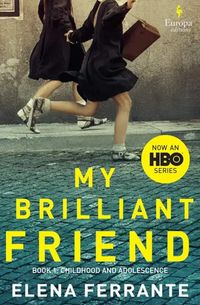
My Brilliant Friend

This is Elena Ferrante’s first book in the Neapolitan Novels series. It follows the intense friendship between two girls, Elena Greco and Raffaella “Lila” Cerullo, growing up in a poor neighborhood in post-war Naples. The novel explores themes of identity, class, and the complexities of female friendship. As the girls navigate their lives, their paths diverge: Elena pursues education and a more conventional life, while Lila’s fierce intelligence and rebellious spirit lead her to reject societal norms. The story delves...

Read more →

In the Heart of the Heart of the Country

Initial thoughts on just beginning to read this brief work: I’ve never read William H. Gass and somehow confused him with German writer and Nobel laureate Günter Grass. Perhaps this confusion emerged when I picked up Gass’s Tunnell at the library one day and it seemed to be about World War II. Regardless, I began reading this narrated piece by a lonely man stuck in small-town Indiana; he is filled with acerbic descriptions of a world fading away, but who...

Read more →

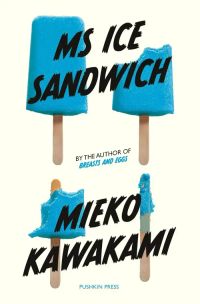
Ms Ice Sandwich

Ms Ice Sandwich by Mieko Kawakami is a brief but oddly engaging novel narrated by a grammar school student who is enchanted by a woman working at the sandwich counter at a grocery store he passes every day. He is struck dumb by Ms Ice Sandwich’s large eyes and electric blue eyeliner. Every day during the course of a summer he enters the store, waits on a short queue and orders a sandwich, which she nabs with steel tongs and...

Read more →

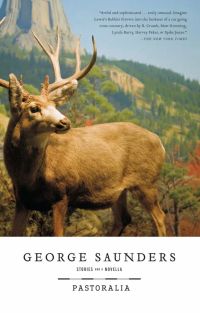
Pastoralia

George Saunders published Pastoralia in 2000. The collection consists of six stories, each exploring themes of consumerism, capitalism, and the complexities of human relationships. Set in a theme park, the title story “Pastoralia” is a darkly comedic satire. Employees live and act like prehistoric cave dwellers. The protagonist, a man known as “the cave man,” struggles to maintain a sense of dignity and purpose. In the real world, we learn the cave man has a wife and they have a...

Read more →

Passing

Nella Larsen external link wrote the novella Passing in 1929. The story revolves around the friendship of Irene ('Rene) Redfield, whose point of view carries the story, and Clare Kendry. Both are married. Irene to a darker skinned Black man who is a Physician in Manhattan. Clare to a racist white businessman who doesn’t know she is actually a light skin Black woman ‘passing’ as white. Both 'Rene and Clare can pass as white. Both women use 'passing' for certain...

Read more →

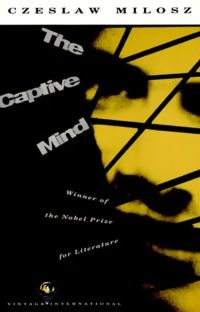
The Captive Mind

The Captive Mind by Czesław Miłosz external link . Essays out of central Europe during the First Cold War by one of Poland’s leading intellectuals. The Captive Mind is divided into four parts. Each part examines a different mindset adopted by intellectuals in response to the oppressive political environment. Miłosz analyzes the impact of communist ideology on the human psyche. He delves into how intellectuals compromised their beliefs, suppressed their individuality, and conformed to the demands of the ruling regimes....

Read more →

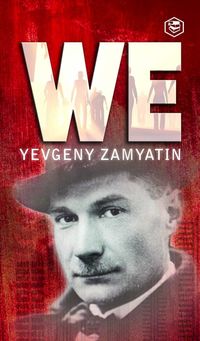
We

Zamyatin’s little-known dystopian novel We influenced Ayn Rand, George Orwell external link , and Aldous Huxley, and unlike them, he had no model. Zamyatin wrote We in 1921. The Benefactor, the one ruler, assigns numbers to citizens. Society uses pure mathematics as a religion. So the novel has the influence of the Logical Positivism of the day. The novel refers to groups and individuals as “ciphers” or “unifs.” The novel is a series of journal entries by engineer I-503. He...

Read more →

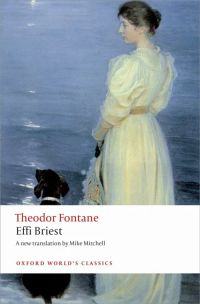
Effi Briest

Effi Briest is a novel written by Theodor Fontane and published in 1895. Set in 19th-century Germany, the story follows the life of Effi Briest, a young woman who enters into a socially advantageous but ultimately troubled marriage. Effi Briest, at the age of 17, marries Baron Geert von Innstetten, a much older and respected man who holds a high position in the Prussian government. The marriage is arranged by Effi’s parents for financial and social reasons. Initially, Effi is...

Read more →

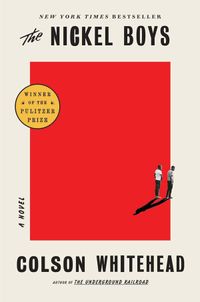
The Nickel Boys

The Nickel Boys is a chilling novel based on a true story, which begins with hope and ends in tragedy. Racial profiling and profiteering on the part of a reform school (Nickel School, based in Florida) and its administrator sets the plot in motion. Medieval corporal punishments for minor infractions sharpened the cruelty experienced by the students. An unfortunate favor one student tries to do for his friend puts the final period in his sentence. Studious, hard-working Elwood is done...

Read more →

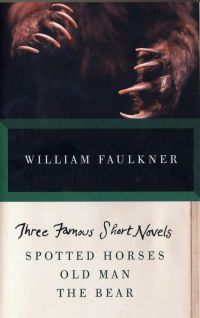
The Bear

The Bear follows a young boy named Isaac McCaslin, who goes on numerous hunting trips into the wilderness with his uncle and other men. During these excursions, they come across a bear named Old Ben who has been killing and eating livestock from local farms. The men are determined to hunt down and kill Old Ben. Over many years and hunting trips, different members of the group try and fail to kill the formidable Old Ben, who proves to be...

Read more →

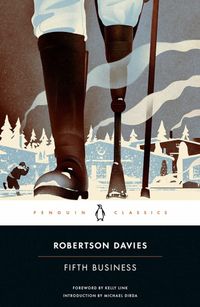
Fifth Business

Published in 1970, Fifth Business is Canadian author Robertson Davies external link ’ first part of the Deptford Trilogy. The novel begins with the childhood incident that shapes Ramsay’s life. As a young boy, Ramsay witnesses a traumatic event involving his schoolmate Percy Boyd Staunton and another boy named Mary Dempster. This incident sets off a chain of events that reverberate throughout Ramsay’s life. Ramsay becomes what he refers to as the “fifth business” in the lives of the people...

Read more →

The Box Man

The Box Man is one of Kobo Abe external link 's more abstruse and obscure novels. Best known as the author of The Woman in the Dunes , Abe combines wildly imaginative fantasies and naturalistic prose to create narratives reminiscent of the work of Kafka and Beckett. In this eerie and evocative masterpiece, the nameless protagonist gives up his identity and the trappings of a normal life to live in a large cardboard box he wears over his head. Wandering...

Read more →

To Have and Have Not

Hemingway’s To Have and Have Not is a commentary on the time of The Great Depression told from multiple viewpoints. He wrote it sporadically between 1935 and 1937. Then revised it as he traveled back and forth from Spain during the Spanish Civil War. The novel portrays Key West and Cuba in the 1930s and provides a social commentary on that time and place. Hemingway biographer Jeffrey Meyers described the novel as heavily influenced by the Marxist ideology. Hemingway was...

Read more →

Sula

“Sula” is a novel written by Toni Morrison, published in 1973. Set in the fictional town of Medallion, Ohio, the story spans several decades and explores the complex relationship between two Black-American women, Sula Peace and Nel Wright. The novel begins with the childhood friendship of Sula and Nel, two young girls who create a strong bond despite their contrasting personalities. She is rebellious, independent, and unapologetic, while Nel is more conforming and reserved. As they grow older, their paths...

Read more →