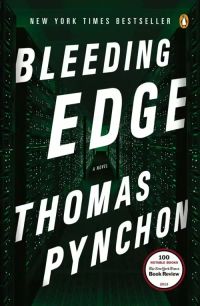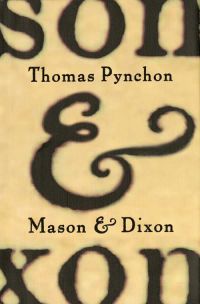
Pynchon’s Mason & Dixon follows the adventures of two historical figures, Charles Mason and Jeremiah Dixon. The two were surveyors and astronomers tasked with establishing the boundary line between Pennsylvania and Maryland in the 18th century. Pynchon employs the language of the Enlightenment period helping to recreate the atmosphere of that era. From the novel’s first page: Snow-Balls have flown their Arcs, starr’d the Sides of Outbuildings, as of Cousins, carried Hats away into the brisk Wind off Delaware,— the...
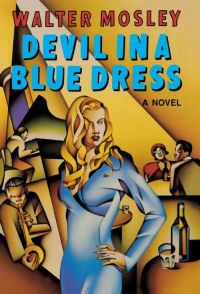
Walter Mosley wrote and published Devil in a Blue Dress in 1990. It is the first book in the Easy Rawlins noir detective series. Set in Los Angeles in the 1940s, the story revolves around the protagonist, Ezekiel “Easy” Rawlins, as he becomes entangled in a web of crime and corruption. The novel begins with Easy Rawlins, a Black American World War II veteran, who is recently laid off from work. Desperate for money to pay his mortgage, he accepts...
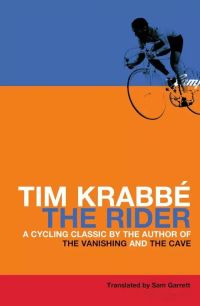
The Rider is a memoir written by Dutch author Tim Krabbé and originally published in 1978. It recounts the author’s personal experience of participating in a cycling race called the Tour de Mont Aigoual. The book takes readers on a journey through the mind of a cyclist as Krabbé narrates his own race experience. He provides a detailed and introspective account of the physical and mental challenges faced during the grueling competition. Krabbé’s writing captures the essence of endurance sports....
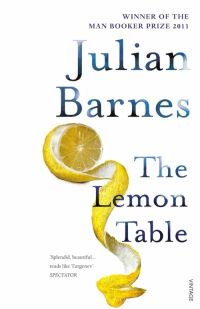
The Lemon Table is a collection of short stories written by Julian Barnes and published in 2004. The book explores themes of aging, mortality, and the complexities of human relationships through a series of interconnected narratives. The stories in The Lemon Table revolve around characters who are either facing the challenges of old age or grappling with the loss of loved ones. Barnes delves into the emotional and psychological aspects of aging, examining the fears, regrets, and reflections that come...
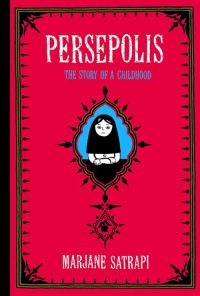
Persepolis is an autobiographical graphic novel written by Marjane Satrapi and published in 2000. It’s about the author’s childhood and adolescence in Iran during the Islamic Revolution and the subsequent Iran-Iraq War. The book begins with Marjane as a young girl growing up in Tehran. She witnesses the cultural and political changes brought about by the Iranian Revolution. Through her eyes, readers witness the imposition of strict Islamic rules and the effects of war on everyday life. As Marjane navigates...
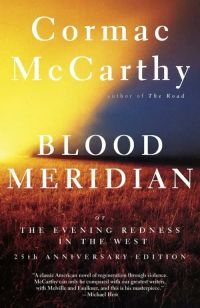
Cormac McCarthy published Blood Meridian in 1985. Set in the mid-19th century, the story follows a runaway known as “the Kid” who joins a band of ruthless scalp hunters. The narrative centers around the Kid’s experiences with the gang, led by the enigmatic and brutal Judge Holden. As they venture into the lawless violent frontier they take part in relentless acts of violence. They engage in massacres, scalping, and other atrocities committed against Native Americans and Mexican settlers. Blood Meridian...
Thomas Pynchon wrote V. in 1963. The narrative follows two interconnected storylines that unfold across time and continents. The first storyline of Pynchon’s V. centers around Benny Profane, a disenchanted sailor. Benny becomes entangled in the lives of a group of eccentric individuals known as the Whole Sick Crew. Profane navigates a chaotic and absurd world filled with bizarre characters and strange occurrences. He often finds himself in peculiar and humorous situations. The second storyline revolves around Herbert Stencil, an...
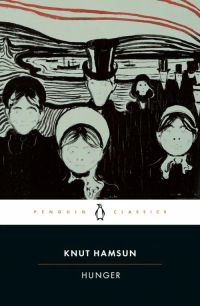
Hunger is a novel written by Norwegian author Knut Hamsun and published in 1890. It follows the story of an unnamed protagonist, a struggling writer living in the city of Kristiania (now Oslo). He is the epitome of the starving artist. The novel is a psychological exploration of the protagonist’s descent into physical and mental deprivation. He wanders the streets, desperately searching for food and work. He becomes consumed by his hunger and the constant struggle to survive. The narrative...
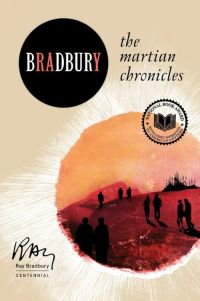
The Martian Chronicles is a collection of interrelated science fiction short stories written by Ray Bradbury and published in 1950. The book presents a series of loosely connected narratives that depict humanity’s colonization and exploration of Mars, as well as the complex interactions between humans and the native Martians. The stories in The Martian Chronicles span a wide range of themes and periods, creating a tapestry of Martian history. Bradbury explores topics such as the allure of space exploration, the...
The Poems of Philip Larkin show him to be one known for his introspective and often pessimistic view of the world. Here is a summary of some of his notable poems: “Be the Verse” Larkin’s most famous and controversial poem. It reflects on the negative impact of family and inheritance on individuals. The poem emphasizes the perpetuation of unhappiness and disappointment across generations. They fuck you up, your mum and dad. They may not mean to, but they do. They...
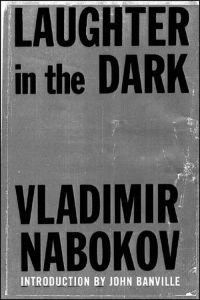
Vladimir Nabokov wrote and published Laughter in the Dark in 1932. The story follows the life of Albinus, a middle-aged art critic who becomes infatuated with a young aspiring actress, Margot. Albinus, a respected and affluent man, leaves his wife and enters into a passionate affair with Margot. However, as their relationship unfolds, Albinus becomes increasingly blind to Margot’s true character. Margot manipulates and deceives him. She uses him for her gain and to pursue her ambitions in the world...
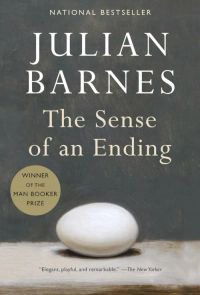
The narrative of The Sense of an Ending unfolds in two parts. The first part focuses on Tony’s youth and his friendships with a group of intellectual classmates. His close friend Adrian Finn is of particular interest in the plot. The second part takes place in Tony’s later life as he receives an unexpected bequest. It forces him to reevaluate his understanding of the past. As Tony delves into his memories, he confronts the fallibility of memory itself and the...
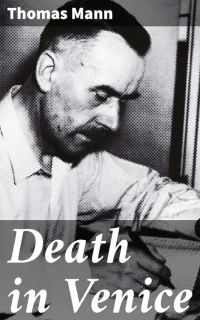
Death in Venice is a novella written by Thomas Mann. Set in the early 20th century, it tells the story of Gustav von Aschenbach. Aschenbach is a renowned and disciplined writer who travels to Venice in search of inspiration and a change of scenery. However, his visit becomes an introspective journey into his desires and the exploration of beauty, decay, and mortality. Aschenbach becomes captivated by the beauty of a young Polish boy named Tadzio, who embodies the ideal of...
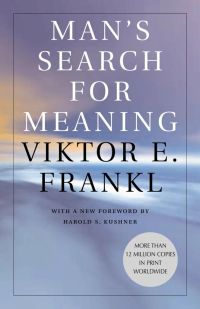
Viktor Frankl, an Austrian psychiatrist and Holocaust survivor wrote Man’s Search for Meaning in 1946. Frankl divides the book into two parts and explores his experiences in Nazi concentration camps. It also goes into his development of logotherapy, a form of psychotherapy focused on finding meaning in life. In the first part, Frankl vividly recounts his time in Auschwitz and other concentration camps during World War II. He reflects on the extreme suffering and dehumanization he and his fellow prisoners...
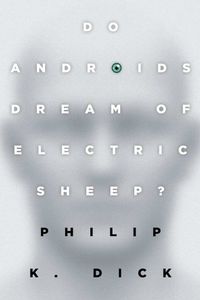
Philip K. Dick wrote Do Androids Dream of Electric Sheep? in 1968. Set in a post-apocalyptic future where most of Earth’s animal species have become extinct, the novel . Humans have emigrated to other planets. The remaining inhabitants on Earth strive to own and care for live animals as a status symbol. The central protagonist is Rick Deckard. Deckard is a bounty hunter who retires rogue androids, known as replicants. The replicants have escaped from off-world colonies and returned to...
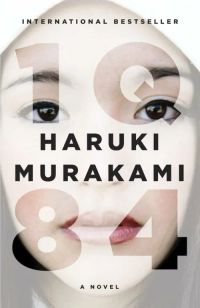
Haruki Murakami, a renowned Japanese author, wrote 1Q84 in bunko editions from 2009 to 2010. Set in Tokyo during the year 1984, the story follows two main protagonists, Aomame and Tengo, whose paths become intertwined as they navigate a peculiar and mysterious alternate reality. A secret organization known as “Sakigake” draws Aomame into it. Aomame is a skilled assassin. Tengo rewrites a mysterious novel conspiratorially. Teenage girl Fuki-Eri titles the novel “Air Chrysalis”. If this sounds hard to follow, it...
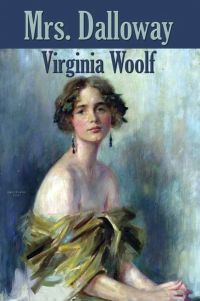
Virginia Woolf wrote Mrs. Dalloway in 1925. Set in London in the early 20th century, the story takes place over a single day. It follows the thoughts and experiences of various characters. The novel centers around Clarissa Dalloway, an upper-class woman preparing for a party she is hosting in the evening. As Clarissa goes about her day, her thoughts and memories intertwine with events and encounters with other characters. Through her perspective, Woolf delves into themes of identity, social conventions,...
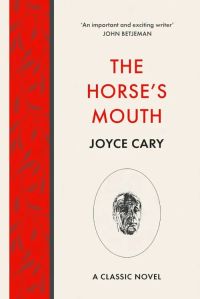
The Horse’s Mouth is a novel written by Joyce Cary and published in 1944, centering on the compelling character of Gulley Jimson. An unconventional artist, Gulley is larger-than-life and tirelessly pursues his passion for art, reflecting the complexities and chaos of the art world. Gulley’s fervent dedication to his craft drives his eccentricity and talent. He relentlessly seeks inspiration, often pushing boundaries to create his masterpieces. Despite his artistic prowess, Gulley grapples with societal expectations and frequently clashes with the...
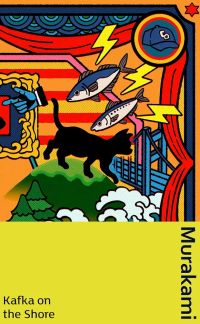
Kafka on the Shore (海辺のカフカ, Umibe no Kafuka) is a 2002 novel by Japanese author Haruki Murakami. Its 2005 English translation was among “The 10 Best Books of 2005” from The New York Times and received the World Fantasy Award for 2006. The book tells the stories of the young Kafka Tamura, a bookish 15-year-old boy who runs away from his Oedipal curse, and Satoru Nakata, an old, disabled man with the uncanny ability to talk to cats. The book...
Chilean author Roberto Bolaño wrote and published 2666 posthumously in 2004. It is a sprawling and complex work that weaves together multiple storylines and characters. It explores themes of violence, the search for meaning, and the human condition. The novel is divided into five parts, each with its own distinct narrative focus. I. The part about the critics The first part introduces four European literary critics obsessed with the elusive and reclusive German author Benno von Archimboldi. II. The part...
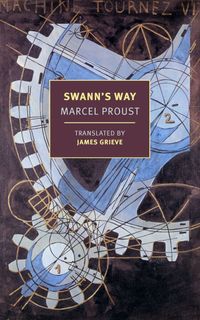
At the risk of invoking a Monty Pythonesque guffaw, here is a summary of Proust and specifically Swann’s Way . Published in 1913, Swann’s Way is the first volume of Marcel Proust’s seven-part novel, In Search of Lost Time . The volume serves as an introduction to Proust’s intricate exploration of memory, time, and the complexities of human experience. Swann’s Way begins with the narrator’s reminiscences of his childhood in the fictional town of Combray. Proust structures the narrative around...
The Moviegoer is a novel written by Walker Percy and published in 1961. It tells the story of Binx Bolling, a young man living in New Orleans who is grappling with a sense of alienation and a search for meaning in his life. Binx Bolling, the protagonist and narrator, comes from a privileged Southern family but feels disconnected from the world around him. He finds solace in going to the movies, seeking refuge in the fantasy world of the silver...
T.C. Boyle published The Road to Wellville in 1993. Set in the early 20th century, it explores the eccentric and often controversial practices of health enthusiasts in the pursuit of well-being. The story revolves around two main characters. Dr. John Harvey Kellogg, a real-life figure and the inventor of corn flakes and Will Lightbody, a fictional character seeking a cure for his chronic digestive issues. Dr. Kellogg runs the Battle Creek Sanitarium, a health resort promoting holistic healing and physical...
Carlos Ruiz Zafón published The Angel’s Game in 2008. It is set in 1920s Barcelona. It is a prequel to Zafón’s earlier work, The Shadow of the Wind , but can be read as a standalone story. The novel delves into themes of love, obsession, and the blurred lines between reality and fiction. The story follows David Martín, a young writer struggling to make ends meet as a journalist. He receives an offer from a mysterious publisher named Andreas Corelli...
Philip Roth wrote American Pastoral in 1997. Set against the backdrop of post-World War II America, the story explores the disintegration of the American Dream through the lens of one family. American Pastoral centers around Seymour “Swede” Levov, a successful Jewish-American businessman and former star athlete. Swede seemingly embodies the American Dream, with a beautiful wife named Dawn and a daughter named Merry. However, the tranquil façade of Swede’s life is shattered when Merry becomes involved in radical political activities...
José Saramago wrote and published Blindness in 1995. It is a thought-provoking and allegorical story that explores the fragility of humanity and the breakdown of society in the face of an epidemic of sudden blindness. The novel begins when a “white blindness” strikes people in an unnamed city. People lose their sight overnight, leaving the city’s inhabitants in a state of panic and confusion. Among the blind, a doctor, his wife, a girl, her mother, a thief, and others play...
Elizabeth Strout wrote Olive Kitteridge in 2008. It is a collection of interconnected stories that revolve around the complex and often prickly character of Olive Kitteridge. Olive is a retired schoolteacher living in the small coastal town of Crosby, Maine. The novel delves into the lives of the residents of Crosby, with Olive serving as the thread connecting the narratives. Through a series of episodic chapters, the reader gains insight into Olive’s struggles. Olive is depicted as a strong-willed and...
J.G. Farrell wrote and published The Siege of Krishnapur in 1973. Set during the Indian Rebellion of 1857, aka the Sepoy Mutiny, the story depicts the harrowing experiences of British residents. They find themselves trapped in the fictional town of Krishnapur, located in British India. The novel begins with British residents of Krishnapur living an idyllic life, protected from the realities of the Indian rebellion. However, as the rebellion gains momentum, the town becomes besieged by rebel forces, cutting off...
Thomas Pynchon published Inherent Vice in 2009. Set in 1970s California, the story follows private detective Larry “Doc” Sportello as he becomes caught up in a complex and psychedelic web of mystery, conspiracy, and counter cultural chaos. The novel unfolds in the made-up Gordita Beach, where Doc leads an easy and mostly aimless existence. When Doc’s former girlfriend Shasta Fay Hepworth shows up one day seeking help, his life takes an unexpected turn. She knows of a plot to kidnap...
J.M. Coetzee published Elizabeth Costello in 2003. The story revolves around the fictional character of Elizabeth Costello, a renowned and aging Australian writer who travels the world giving lectures and engaging in philosophical debates. The novel is structured as a series of chapters that depict different moments in Elizabeth’s life. These moments include her interactions with family members, encounters with other intellectuals, and public speaking engagements. Through these episodes, Coetzee raises profound questions about literature, ethics, animals, and the nature...