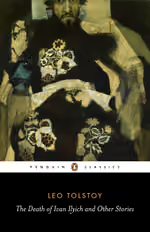
Published in 1886, Leo Tolstoy’s “The Death of Ivan Ilyich” opens where most stories end: with a high-ranking Russian judge lying dead in a coffin. His colleagues offer brief, superficial condolences, privately relieved it wasn’t them, before immediately returning to their card games and career ladder-climbing.
From there, Tolstoy rewinds the clock to dissect a life defined by shallow ambition. Ivan Ilyich has spent his entire existence pursuing the proper titles, the right furniture, and cold societal approval—living a life that is, on paper, irreproachable, but fundamentally hollow.
That artificial world shatters with a petty, mundane injury that spirals into an agonizing terminal illness.
As his body breaks down, the physical torment pales in comparison to his existential horror. Confronted by his own mortality, Ivan is forced to admit that his coveted success was a trap, leaving him completely alien to real human warmth. In his final hours, stripped of status and pretense, he scrambles through despair toward a desperate, agonizing search for redemption and genuine spiritual truth.