James Schuyler - greatest poet of the everyday?
A new poet for me. The reviewer, Mae Losasso, makes a bold assertion in the headline (though it may have been an editor). I’m going to add his Collected Poems to my stack of summer reads.
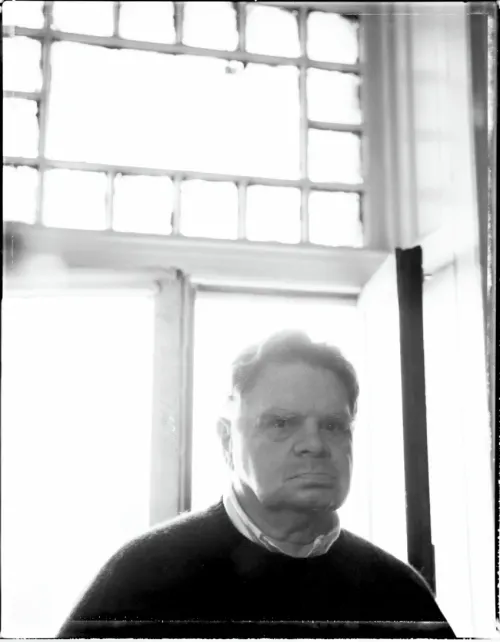
In 1952, back in New York, Schuyler befriended Ashbery and O’Hara—two Harvard graduates who had recently arrived in the city—and he began to apply himself seriously to writing. Yet his poetic career would be marked by belatedness: his first major collection, Freely Espousing, would not be published until 1969, when he was forty-six years old, and he would not give his first public reading until 1988, just three years before his death. A further four major poetry collections would follow Freely Espousing—The Crystal Lithium (1972), Hymn to Life (1974), The Morning of the Poem (1980), for which Schuyler was awarded the Pulitzer Prize, and A Few Days (1985).
Schuyler’s poetic style is marked by its attention to the daily. His poems are diaristic, often registering times and dates, with a relentlessly observational eye that comes to rest on what he calls “the said to be boring things / dreams, weather, a bus trip.” His compositions oscillate between intensely truncated lineation and long, page-spilling lines of Whitmanesque excess—both formal strategies that capture the rambling and digressive immediacies of a mind at work.
October
Books litter the bed,
leaves the lawn. It
lightly rains. Fall has
come: unpatterned, in
the shedding leaves.

The maples ripen. Apples
come home crisp in bags.
This pear tastes good.
It rains lightly on the
random leaf patterns.

The nimbus is spread
above our island. Rain
lightly patters on un-
shed leaves. The books
of fall litter the bed.
More than a whiff of William Carlos Williams in that with a smattering of leafy metaphor for us to rake into piles and jump into them.
Via The Yale Review