Koi Ponds
In which I trawl my photo library for koi, post them here, and provide some hitherto unknown facts about their lives, the first of which is (surprisingly) they do not share a common language across continents. When transported from Japan to Canada for a collector’s pool or pond, a solitary koi will find itself unable to communicate with any other koi in its new pool. For this reason, it is suggested to buy ten or twenty koi if they are to be moved to a far-away land.
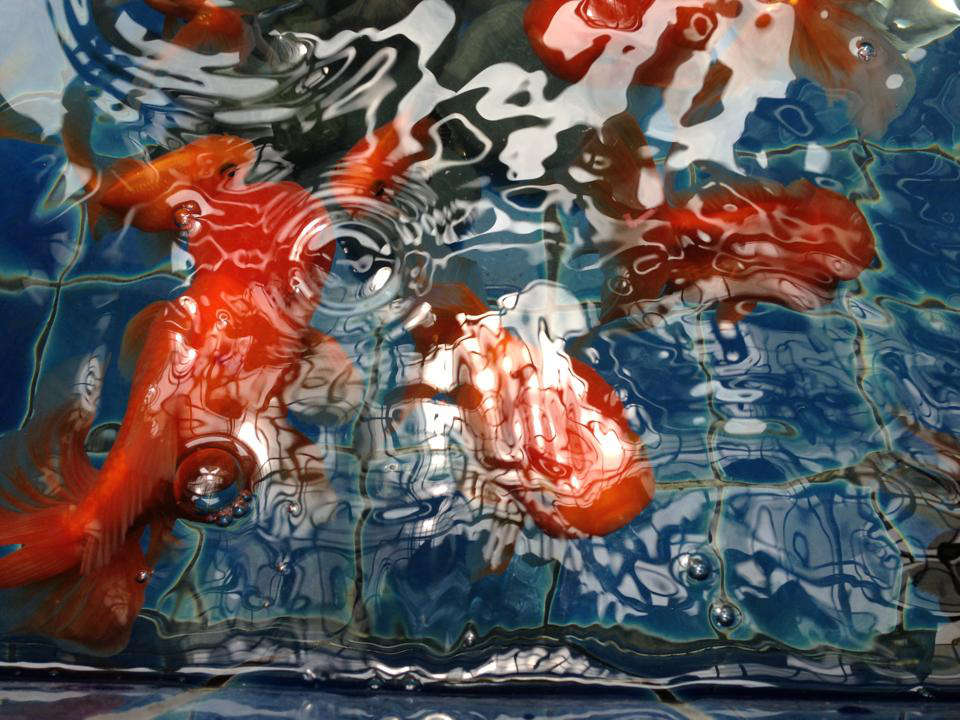
The play of light on a koi pond is a requirement for a good koi photo. Orange koi seem to be the most common, and I’ve only seen orange and yellow, some with white patches. The rarest koi are blue, black, or white. I mostly value the play of light on water, without which, as I mentioned, the koi are completely invisible.
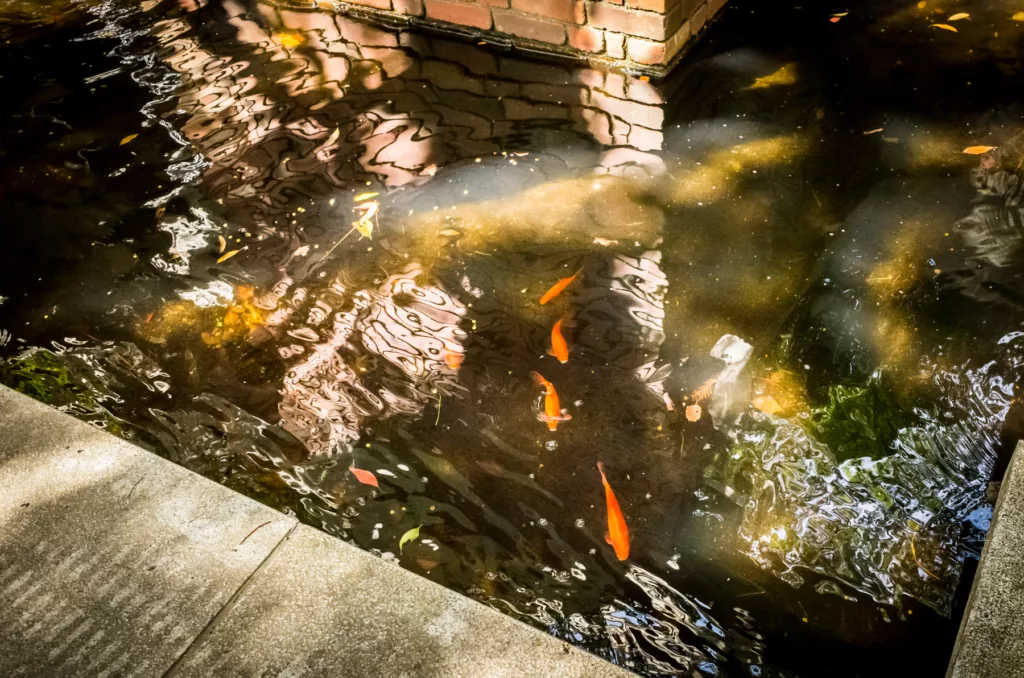
Kobe koi are known among those who know as the chillest koi in all of Japan. Despite the chaos of pond ripples during the great earthquake of '95, not a single one made an unusual move or veered from a course they had in mind. To this day, many people, when confronted with inner or outer turmoil, whisper to themselves, “Be like a Kobe koi.”
I recently saw a documentary about specialist koi collectors who spend untold thousands of dollars on a single fish. The record price for a koi named “S Legend” was USD 1.8 million. S Legend was raised in Japan, and the buyer may have been Chinese, I forget. Koi are sensitive to the cleanliness of water, unlike their catfish cousins, who abide in murky ponds.
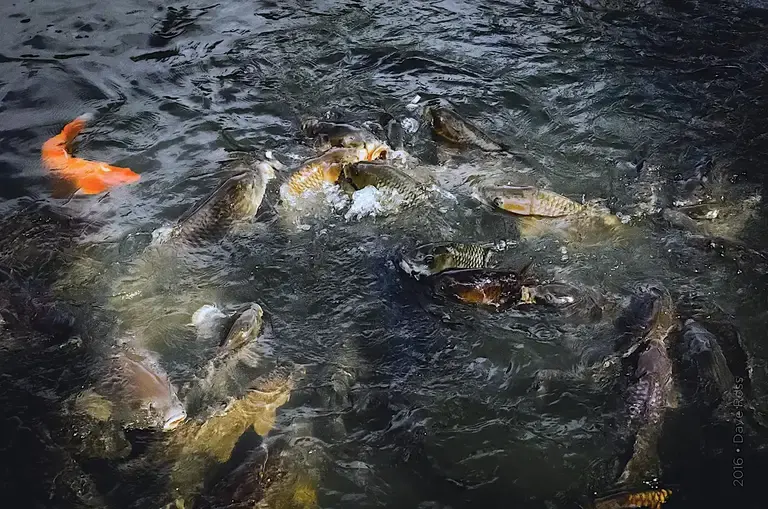
A man in Nara was tossing bread crumbs into a koi pond. He gave us some and pointed at the pond. So I threw the crumbs in and aimed my trusty Ricoh GR-II at the spot, and the photo above shows the result. A melee. Much like the attack-deer of Nara, the koi in Nara are equally assertive about feeding.
In Chinese mythology, there is a story about a koi that kept trying to leap to the top of a 100-foot waterfall. After many, many attempts, it finally managed the enormous leap. The gods witnessed this feat and rewarded the koi by turning him into a dragon—a Confucian lesson in rewards for perseverance. But I have no idea where the story comes from—perhaps not a Confucian lesson. Again, I am an unreliable narrator in this paragraph.
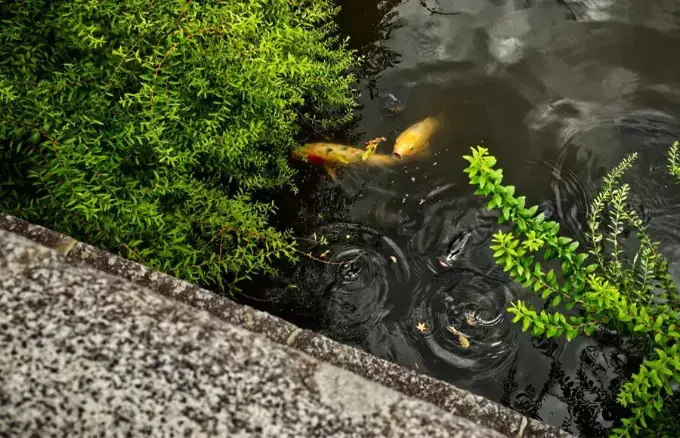
The koi of Kyoto are the most serene and wise. They will be your friend after three or four visits. They will know your aura in ten visits. If you visit every day for a year, they will be able to know you fully, and you them. This is for certain. Take it to the bank.