Todai-ji, Nara, Japan
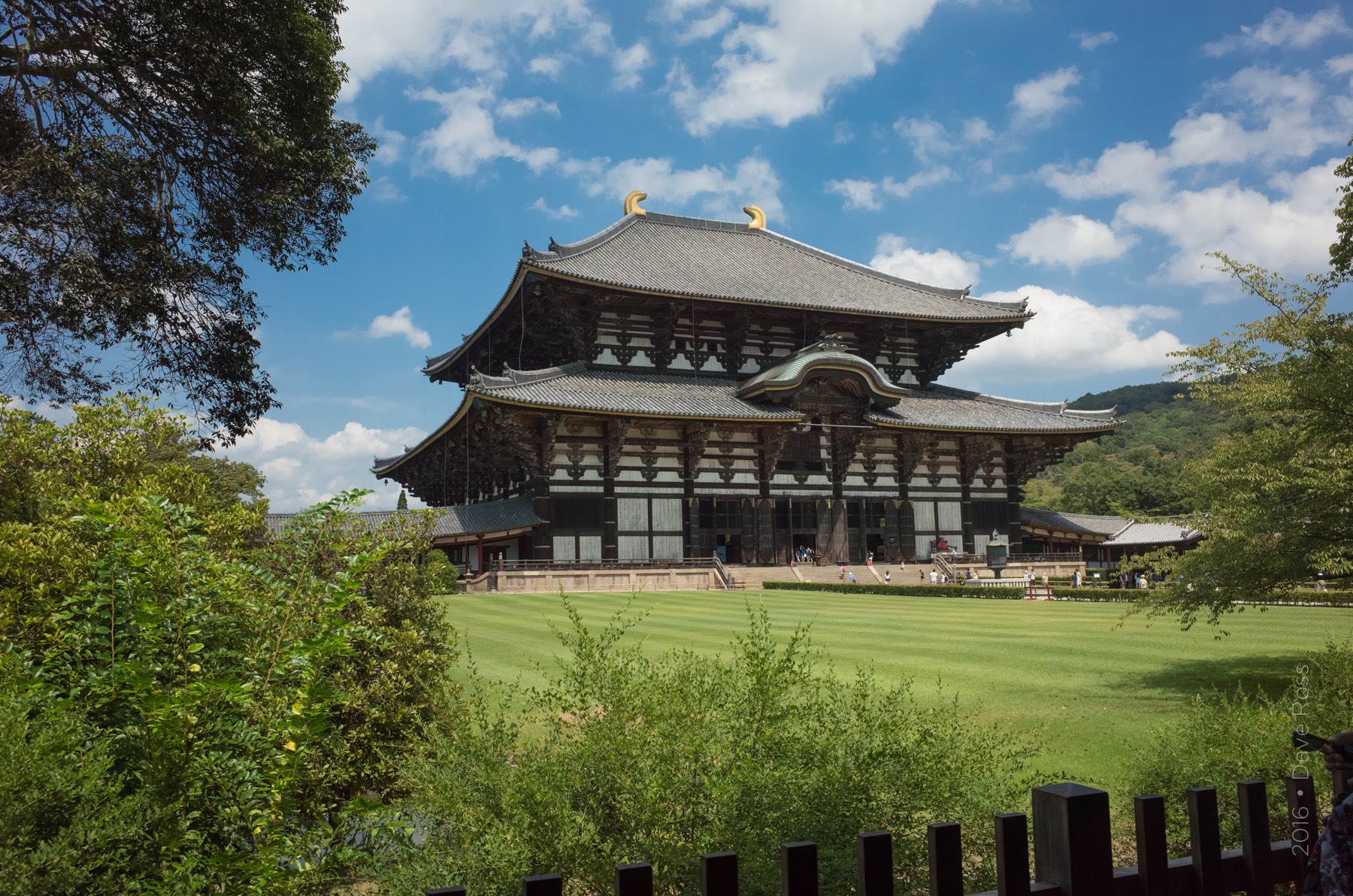
Todai-ji Temple, Nara, Japan. Its construction dates back to the 8th century and over the years 2.6 million citizens have directly or indirectly been involved in its upkeep. I took the photos on this page with my Ricoh GR-II.
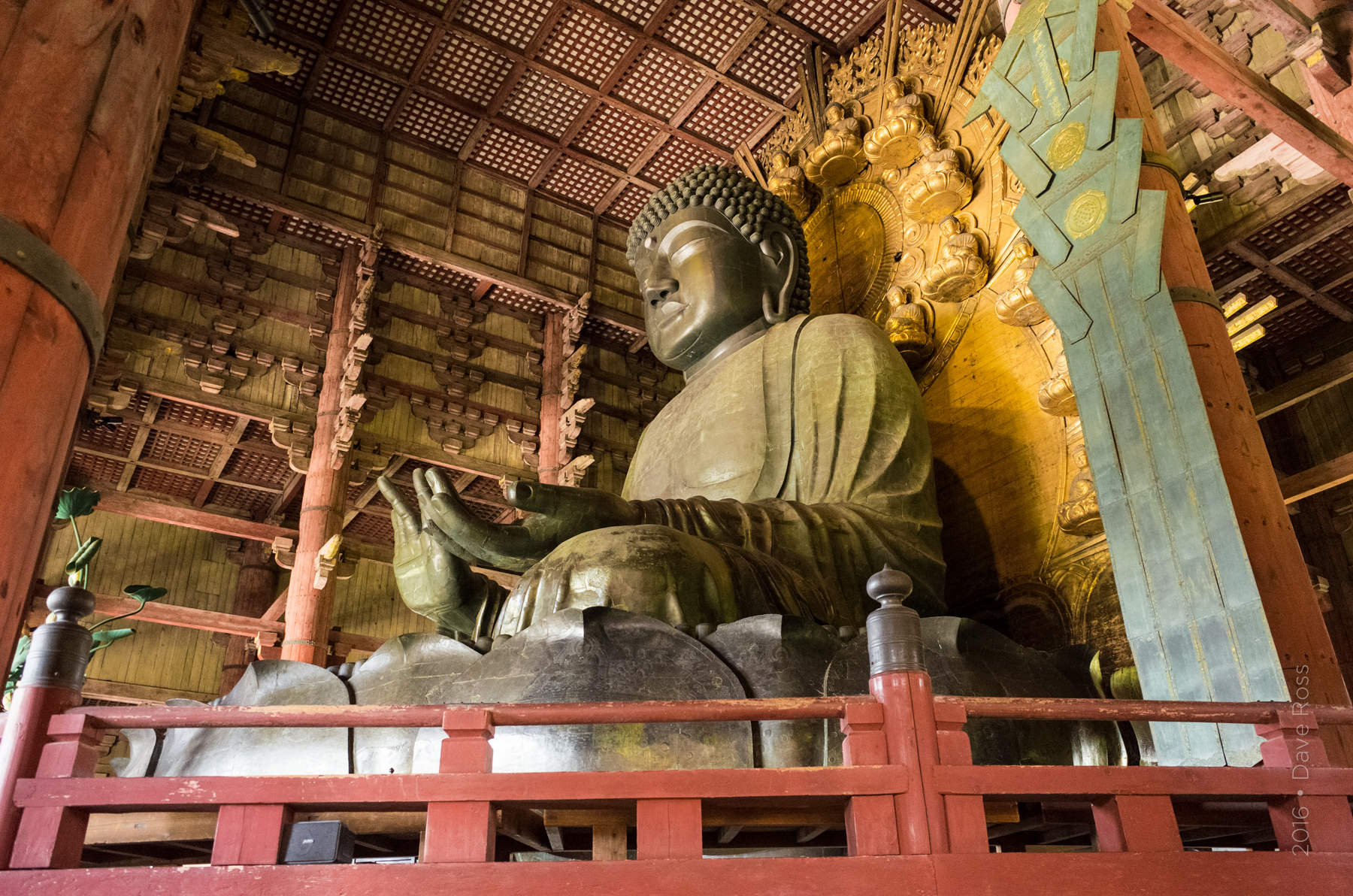
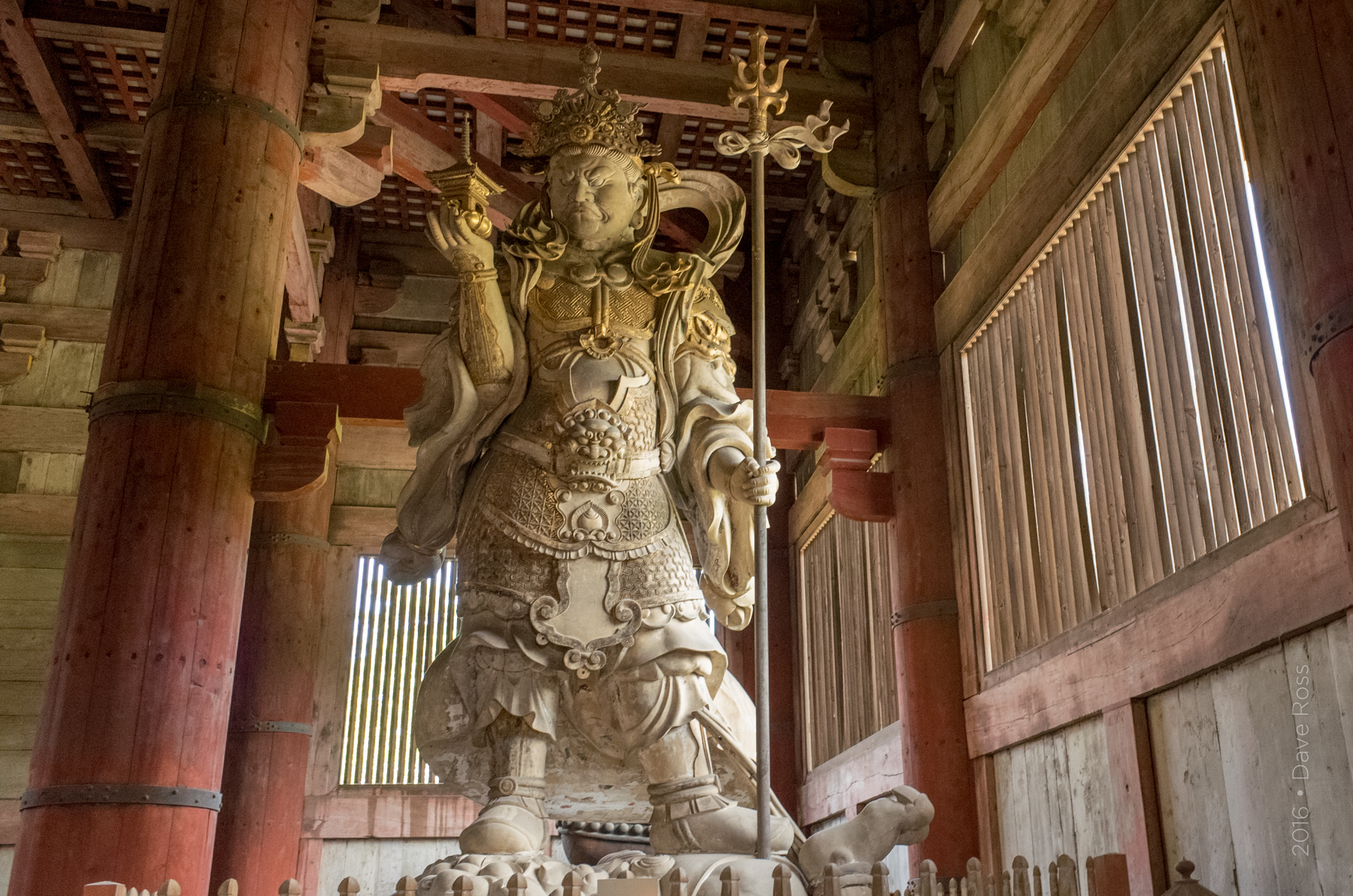
One of Buddha’s two protectors, who flank the right and left sides inside the entrance.
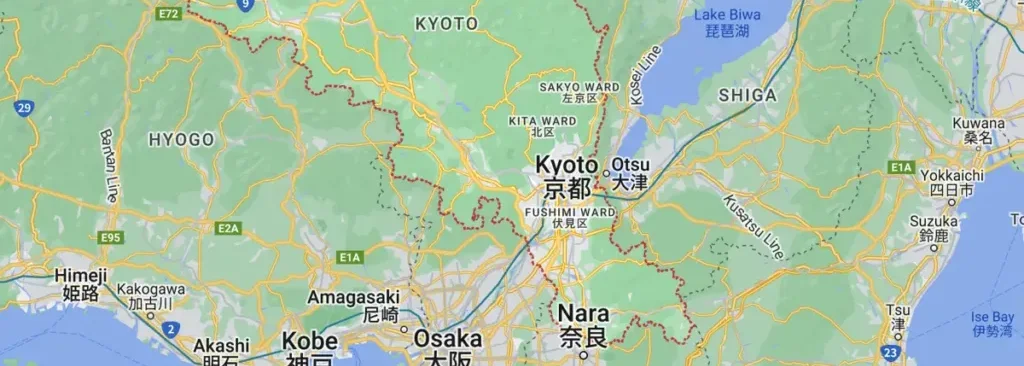
Nara, Japan. Home of one of Japan’s largest temples—Todaiji—and likely one of the largest sitting Buddhas in the nation. Countless deer roam the city, which eat crackers from your hand or nip at your fingers or other areas of your body they suspect you are hiding food. There are actual signs posted about in what ways local deer might assault you. Despite this knowledge, the powers that be operate vending machines of deer crackers for tourists to find ways to put themselves into terrible peril.
We tasted fresh sake from a maker here and observed the dangerous practice of hammering out mochi dough to make the delicious dessert. It involves two guys: one with a carnival-like enormous wooden mallet and a quick-handed assistant to flip the lump of dough and move his hands out of the way of the next hammer-fall, which is about every half a second. After that violent processing of the matcha tea infused glutinous rice flour, the delicate shaping of the mochi into identically sized bite-sized morsels begins. This entails a small machine that dispenses precise globs of the mochi and a conveyor belt that feeds them to a woman who shapes them and drops them into a coating powder to prevent them from sticking to a customer’s hands. There’s nothing quite like fresh mochi.
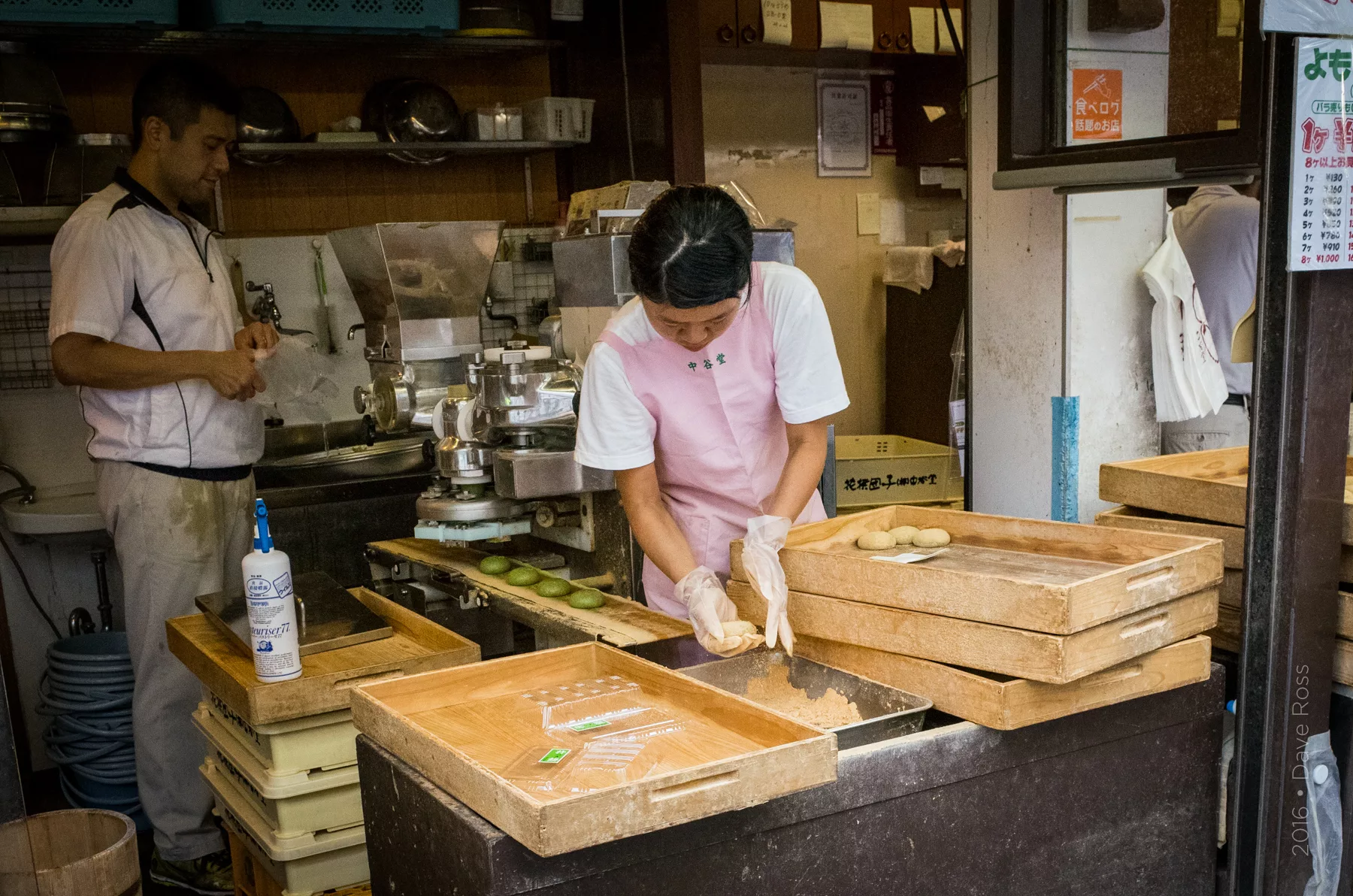
(The final step of the mochi making before they are sold: gently dusting them with something that prevents the mochi from sticking to your hand as you eat it.)