Amanohashidate, Japan
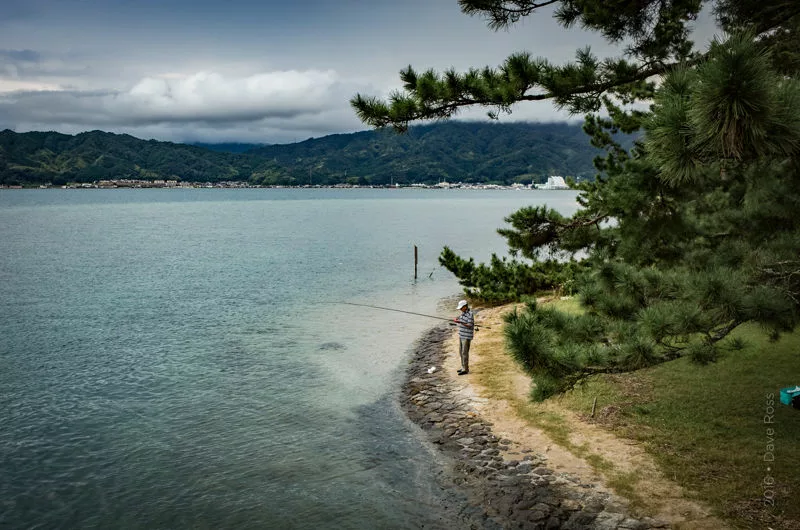
Part of our visit to Japan’s Kyoto and Hyōgo Prefectures in Japan with friends in 2016 included a visit to a distant area of Kyoto Prefecture known as Amanohashidate. It is renowned for its incredible view over a pine tree-lined sandbar isthmus separating Miyazu Bay from the Aso Sea.
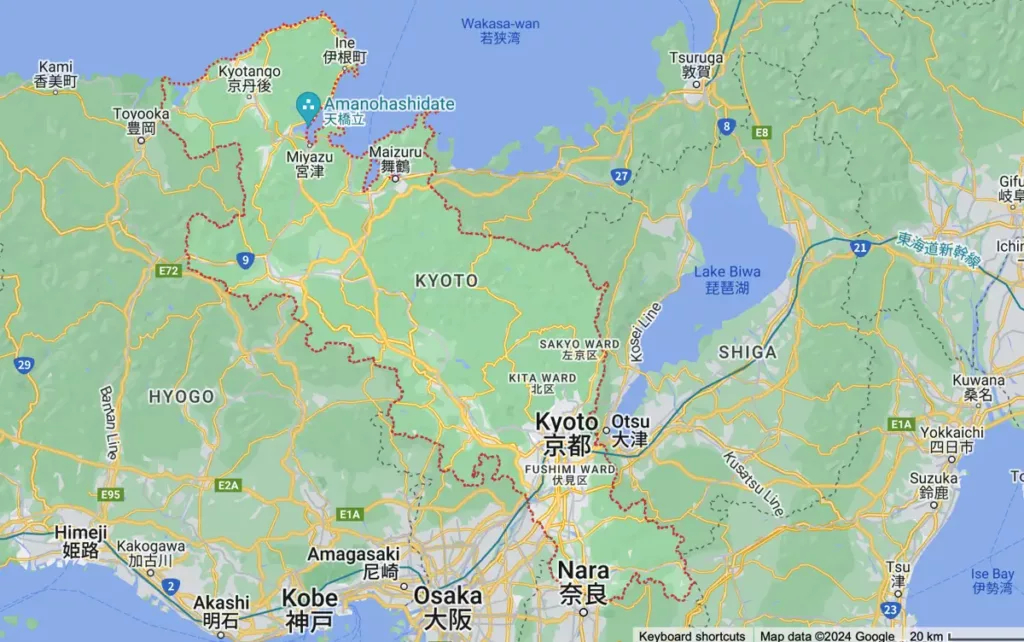
The entire train ride was about 2.5 hours from Kyoto to Amanohashidate with one change in Miyazu, which ended up being a one- or two-car train that was arriving at that station just when we began running for it from the other side of the tracks. We could see the conductor saw our effort and he smiled and waved. He would wait and we would continue our hustle with luggage in tow.
To get a sense of some of the countryside we road past on our train, I recorded a bit on my iPhone.
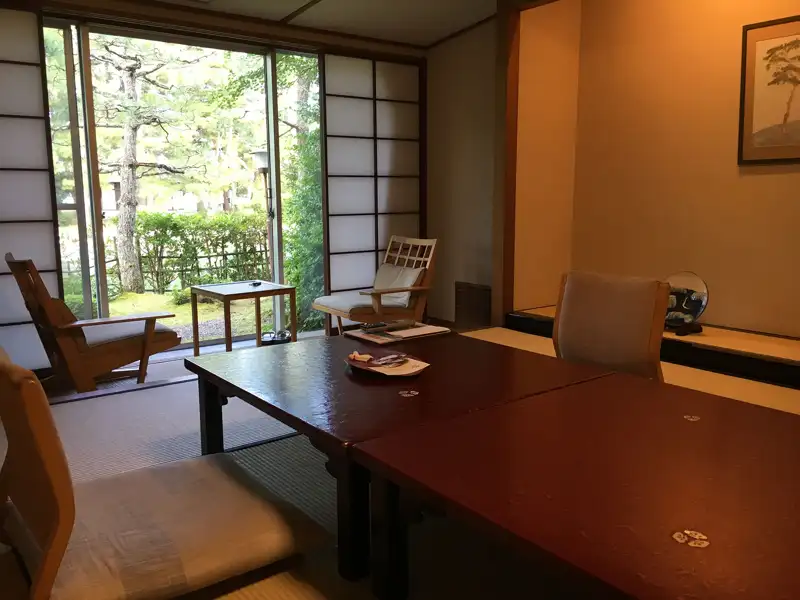
We booked two nights at Monjuso Ryokan, which had the typical wabi-sabi way of spareness and time working together to give it a from-another-era vibe. No TV, no snack fridge, nothing of the current or past century viewable from inside or outside our window. Some ikebana, one painting, a vase of some sort.
We were warmly greeted by two women in traditional kimonos who provided a brief introduction to the inn’s facilities—the onsen, the library, and the quiet bar area. Like no one is in it quiet. I think I saw one person reading a newspaper in the library at one point.
We were left to unpack and relax a bit admiring our green view near a canal that connects Miyazu Bay and the Aso Sea.
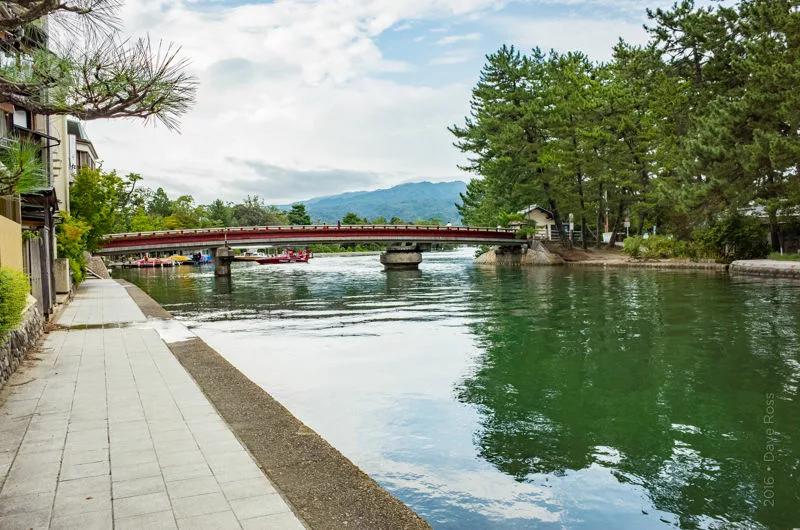
We then ventured out with our fellow travelers to explore our new surroundings. What is not immediately obvious is that this bridge is like a drawbridge to permit tourist ferries and other commercial vessels to get through. The bridge rises on the fatter support on the right in the photo below.
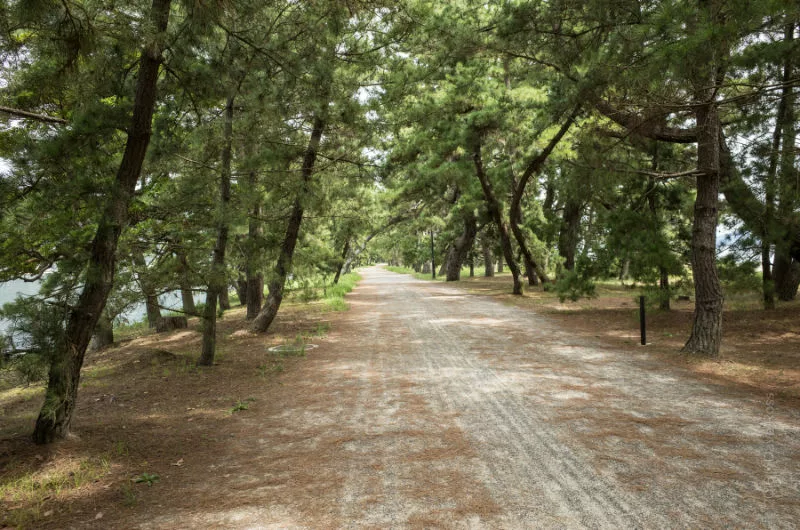
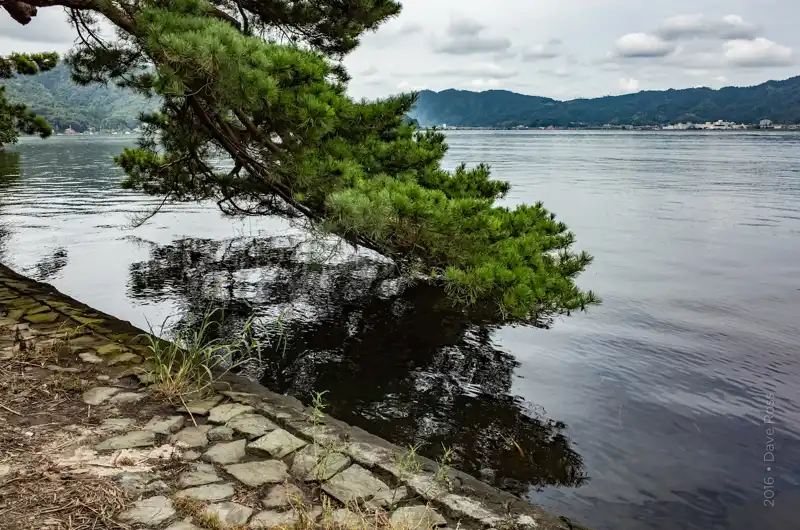
Once over the bridge, the pine trail we walked along stretched a 3.5km path to the other side. The fragrance of pine and the briney sea wafting on the wind was sharp and refreshing even as the day grew warmer and more humid.
On our way across I took a few photos that made me think how easily it would have been for the Japanese culture to create simple, elegant haiku to reflect this beauty. There is so much to feel and describe that putting limits on the syllables was highly sensible to compress imagery and emotion.
A single-person ski lift boosted us up the mountain to a viewing platform.
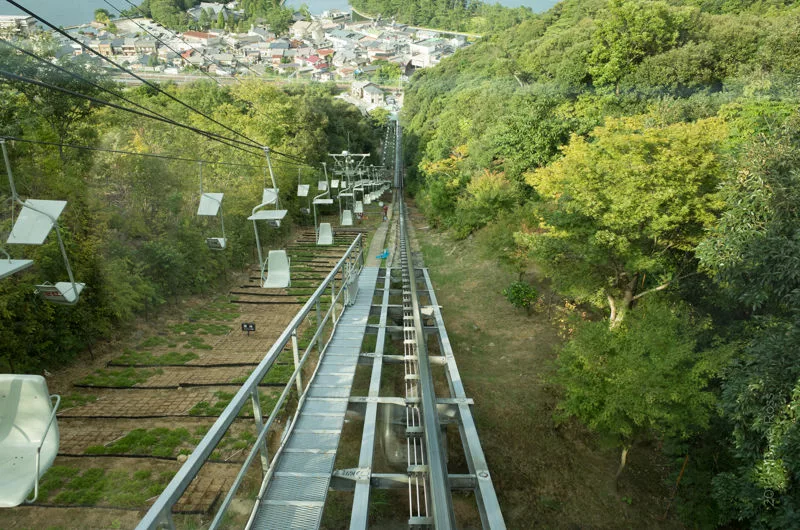
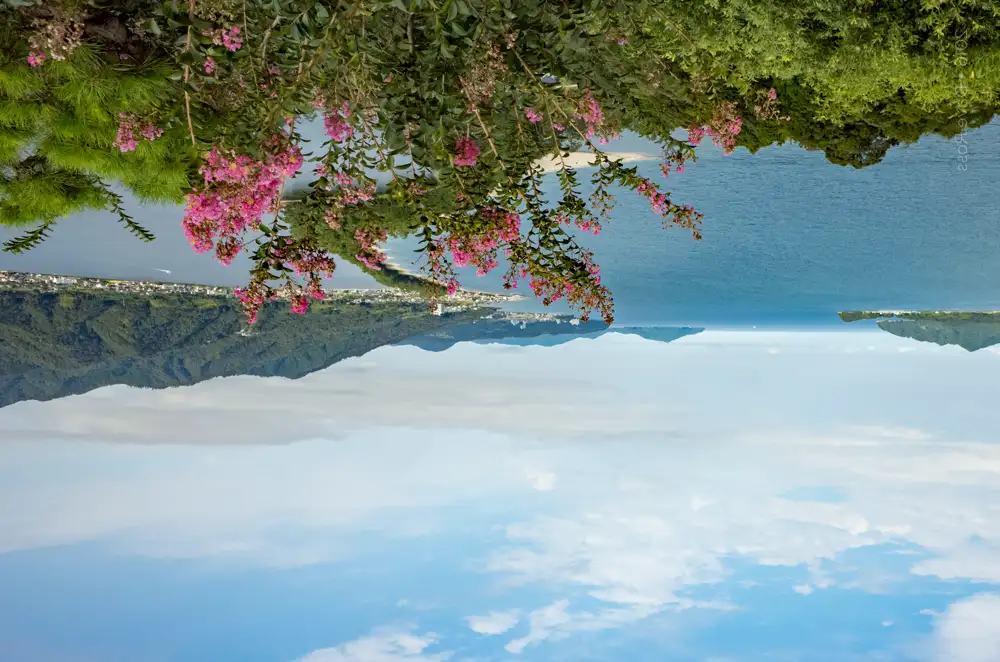
And we were rewarded from several different angles. The angle you are supposed to view from is upside down and through your legs, as it’s supposed to look like a bridge ascending into the heavens. There are even special grab bars to help you keep steady as you assume the position so to speak.
Following a long day of walking, snapping, and poking our noses about in some small and very silent shops we returned to our ryokan and washed and dressed for dinner. I alone in our group wore the yukata and sandals provided by the staff, which were comfortable. Once seated and having drinks in hand, we began receiving our kaiseki dinner, which is a drawn out in a leisurely fashion, one plate presented and described at a time. Some of the dishes were even cooked or finished the cooking process at the table.
We served one another sake throughout the meal as per local custom.
Retiring to our room after, we shifted the tables aside, unrolled two thin but soft mats over the tatami and enjoyed a good night’s sleep. And so concluded day one in this kind of fairytale-like place, out of time, unhurried, and offline.
The following morning I wore the same dusky blue cotton yukata and we knocked on our friends’ door to see if they were awake. There was no answer, so we walked to the large, contemporary dining hall (a definite modern addition to draw in more non-guest diners when the inn was at capacity). Only a dozen people were already enjoying breakfast—the advantages of visiting off-season.
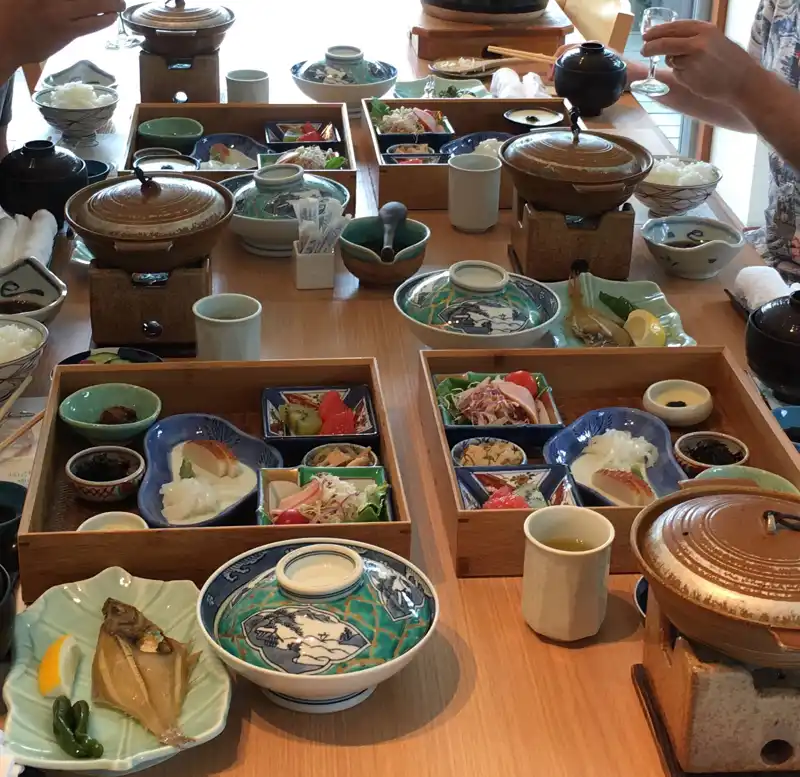
Our friends were already at our appointed table, so we joined them and in a few minutes were presented with giant trays of dishes, each dish was presented on beautiful ceramic dishes. The cuisine here was grown nearby or caught in nearby waters. A fragrant green tea went well with it. I only missed my morning coffee for a little while, as it would not have gone well with the fare.