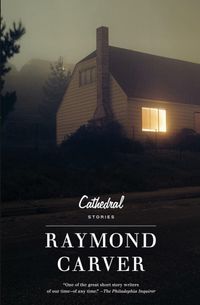
Cathedral is Raymond Carver’s third collection of stories and a finalist for the Pulitzer Prize. It includes the canonical titular story about blindness and learning to enter the different world of another. These twelve stories mark a turning point in Carver’s work and overflow with the danger, excitement, and mystery. His eye is so clear, that it almost breaks your heart." Carver’s editor, Gordon Lish, was a great influence on how the stories turned out.
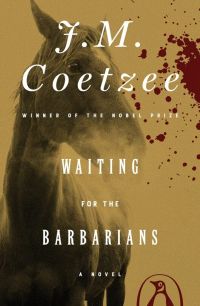
Waiting for the Barbarians is a novel by the South African-born writer J. M. Coetzee. First published in 1980, it was chosen by Penguin for its series Great Books of the 20th Century and won both the James Tait Black Memorial Prize and Geoffrey Faber Memorial Prize for fiction. American composer Philip Glass has also written an opera of the same name based on the book which premiered in September 2005 at Theater Erfurt, Germany. The theme of colonial imposition...
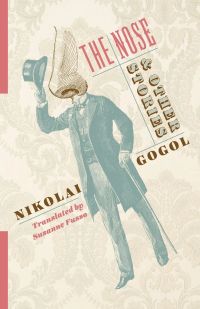
Gogol wrote “The Nose” in 1836. The satirical story is set in St. Petersburg, Russia. It follows the bizarre misadventures of Major Kovalyov and his missing nose. It is a surreal and humorous tale that explores themes of identity, social hierarchy, and absurdity. The story begins with Major Kovalyov waking up one morning to find that his nose has disappeared from his face. Shocked and bewildered, he searches frantically for his missing appendage but fails to find it. To his...
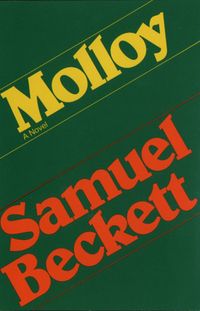
Molloy is the first of three novels initially written in Paris between 1947 and 1950; this trio, which includes Malone Dies and The Unnamable, is collectively referred to as ‘The Trilogy’ or ‘the Beckett Trilogy.’ Beckett deliberately wrote all three books in French and then, aside from some collaborative work on Molloy with Patrick Bowles, served entirely as his own English-language translator; he did the same for most of his plays. As Paul Auster explains, “Beckett’s renderings of his own...
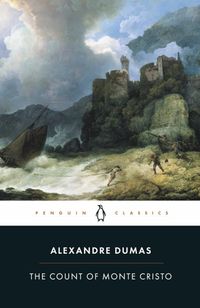
The Count of Monte Cristo (French: Le Comte de Monte-Cristo) is an adventure novel by French author Alexandre Dumas (père) completed in 1844. It is one of the author’s more popular works, along with The Three Musketeers . Like many of his novels, it was expanded from plot outlines suggested by his collaborating ghostwriter Auguste Maquet. Another important work by Dumas, written before his work with Maquet, was the short novel Georges . Georges is of interest to scholars because...
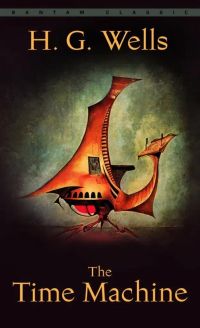
The Time Machine is a classic science fiction novel by H.G. Wells and published in 1895. It tells the story of an unnamed Time Traveller who invents a machine capable of traveling through time. The novel explores themes of social class, evolution, and the possible future of humanity. The Time Traveller gathers a group of acquaintances at his home and demonstrates his invention. He then embarks on a journey into the future, specifically the year 802,701 A.D. There, he encounters...
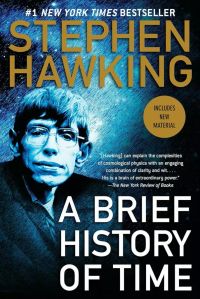
While A Brief History of Time deals with complex scientific concepts, Stephen Hawking ensures that readers without a scientific background can still grasp the main ideas. He uses vivid examples and analogies, such as comparing the expansion of the universe to the motion of raisins in a rising loaf of bread, to make abstract concepts more relatable. Hawking takes readers on a journey through the history of cosmology, from ancient Greek philosophers to modern scientific theories. He explores key concepts...
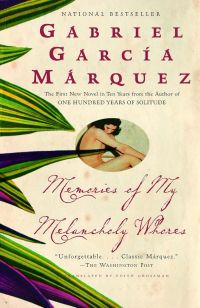
Memories of My Melancholy Whores (Spanish: Memoria de mis putas tristes) is a novella by Gabriel García Márquez. The book was originally published in Spanish in 2004, with an English translation by Edith Grossman published in October 2005. The proper translation of the title would be ‘memory of my sad whores.’ ‘Melancholy’ is a word whose meaning is far more intricate than Spanish triste. And Spanish triste translates best to the English adjective sad. The protagonist, who remains unnamed throughout...
The book provides a firsthand account of Orwell’s experiences during the Spanish Civil War, where he served as a soldier in the Republican militia fighting against the Nationalist forces led by General Francisco Franco. Homage to Catalonia begins with Orwell’s arrival in Barcelona in 1936, shortly after the outbreak of the civil war. He joins the Workers’ Party of Marxist Unification (POUM). The POUM is a revolutionary socialist group, which became actively involved in the fight against Franco’s forces. Orwell...
Italo Calvino published Invisible Cities in 1972, but it feels as if it had always existed. “Cities, like dreams, are made of desires and fears, even if the thread of their discourse is secret, their rules are absurd, their perspectives deceitful, and everything conceals something else.” In a garden sit the aged Kublai Khan and the young Marco Polo—Mongol emperor and Venetian traveler. Kublai Khan sensed the end of his empire coming soon. Marco Polo diverts his host with stories...
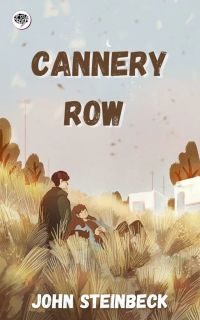
Cannery Row is a novel by American author John Steinbeck, published in 1945. It is set during the Great Depression in Monterey, California. The street is one lined with sardine canneries known as Cannery Row. The story revolves around the people living there, including Lee Chong, the local grocer. Doc, a marine biologist. And Mack, the leader of a group of derelicts. The actual location Steinbeck was writing about in Monterey, was later renamed “Cannery Row” in honor of the...
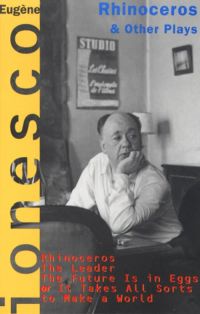
Rhinoceros is a play by Eugène Ionesco, written in 1959. Throughout three acts, the inhabitants of a provincial French town turn into rhinoceroses. Ultimately the only human who does not succumb to this mass metamorphosis is the central character, Bérenger. Bérenger is a flustered everyman figure. Inhabitants initially criticize Bérenger for his drinking, tardiness, and slovenly lifestyle. Later they call him paranoid for an obsession with rhinos. Some critics read Rhinoceros as a response and criticism to the sudden upsurge...
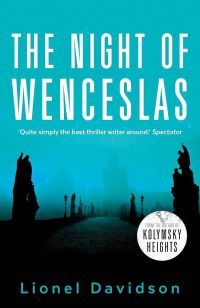
The Night of Wenceslas is the debut novel of British thriller and crime writer Lionel Davidson. This Bildungsroman describes the reluctant adventures of Nicolas Whistler, a dissolute young man of mixed English and Czech parentage who finds himself caught up against his will in Cold War espionage. The novel won the Crime Writers’ Association’s Gold Dagger Award in 1960 and the Author’s Club First Novel Award. It was filmed in 1964 under the title Hot Enough for June. (wikipedia)
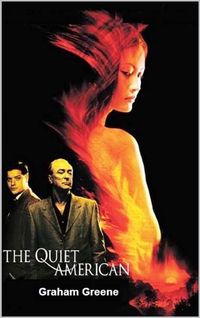
In Graham Greene’s The Quiet American it’s 1955 and British journalist Thomas Fowler has been in Vietnam for two years covering the insurgency against French colonial rule. But it’s not just a political tangle that’s kept him tethered to the country. There’s also his lover, Phuong, a young Vietnamese woman who clings to Fowler for protection. Then comes Alden Pyle, an idealistic American working in service of the CIA. Devotedly, disastrously patriotic, he believes neither communism nor colonialism is what’s...
Miss Lonelyhearts by Nathanael West is set in New York during the Great Depression, a time of economic hardship and social upheaval. Miss Lonelyheart’s real name is never revealed. He receives countless letters from individuals seeking guidance and solace in their troubled lives. However, he finds himself unable to offer genuine help or find meaning in the face of the overwhelming suffering he encounters. As Miss Lonelyhearts becomes increasingly burdened by the weight of his readers’ despair, he descends into...
“The Dead” is a short story written by James Joyce in 1914 as the final story in his collection Dubliners. It is widely regarded as one of the greatest short stories in the English language. Set in early 20th-century Dublin during a Christmas party, the story explores themes of mortality, memory, and the complexities of human relationships. The narrative centers around Gabriel Conroy, a university professor, and his wife, Gretta. The story unfolds as they attend an annual gathering hosted...
Set in medieval Germany Narcissus and Goldmund by Hermann Hesse revolves around the complex and transformative friendship between two contrasting characters. Narcissus, an intellectual and monk, and Goldmund, a restless and artistic wanderer. The novel begins with Goldmund. Raised in a monastery, Goldmund yearns for a passionate existence beyond the confines of religious life. He embarks on a journey of self-discovery. He leaves the monastery to explore the world and indulges in various carnal and artistic experiences. Throughout his travels,...
The narrative of the novel Trainspotting by Irvine Welsh is presented through a series of interconnected short stories, each focusing on different characters within the group. The central character is Mark Renton, a young man caught in the grip of heroin addiction. The novel delves into Renton’s experiences, his attempts at quitting drugs, and the cyclical nature of addiction and relapse. Renton’s friends, including the hot-tempered and unpredictable Francis Begbie. The affable and naive Spud. The ambitious Sick Boy. And...
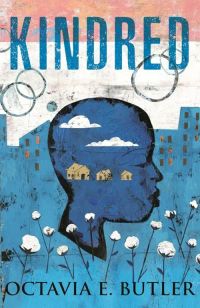
Kindred by Octavia Butler begins with Dana, a young Black American, and her white husband, Kevin, moving into their new home. Suddenly, Dana is yanked back in time to a Maryland plantation in the early 19th century. She finds herself in the presence of Rufus Weylin, a white plantation owner’s son, who is in danger of drowning. Dana quickly realizes that she has been brought back in time whenever Rufus’s life is at risk. Her survival is tied to his....
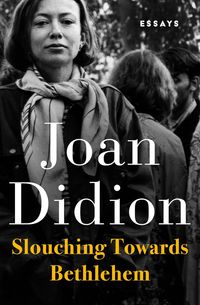
Slouching Towards Bethlehem is a collection of essays divided into two sections: “Life Styles in the Golden Land” and “Personals.” In the first section, Joan Didion provides a series of journalistic essays that offer a critical and perceptive look at different aspects of American life. She delves into topics such as the counterculture movement, the Haight-Ashbury district in San Francisco, and the cultural and social dynamics of California. Didion’s writing is characterized by her keen observations, sharp prose, and her...
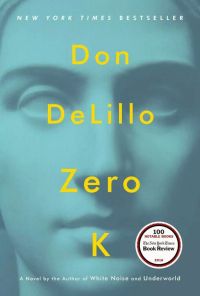
In Zero K , Jeffrey Lockhart’s father, Ross, is a billionaire in his sixties, with a younger wife, Artis Martineau. Her health is failing. Ross is the primary investor in a remote and secret compound where death is exquisitely controlled. Bodies are preserved until a future time when biomedical advances and new technologies can return them to life. Jeff joins Ross and Artis at the compound to say “an uncertain farewell” to her as she surrenders her body. These are...
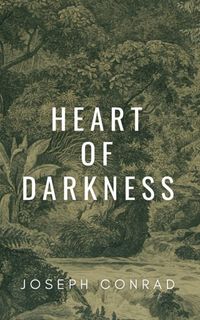
Heart of Darkness is a novella written by Joseph Conrad and published in 1899. The story follows Charles Marlow, a sailor and narrator, as he recounts his journey into the heart of Africa to find the enigmatic ivory trader Kurtz. Marlow’s quest takes place during the height of European colonialism in Africa. As he travels up the Congo River, he witnesses the brutal and exploitative nature of imperialism firsthand. The novella explores themes of darkness, moral ambiguity, and the corrupting...
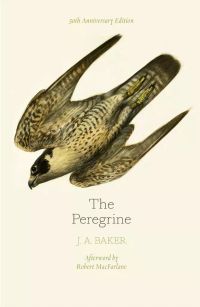
The Peregrine is a nature book written by J. A. Baker and published in 1967. It is a deeply immersive account of the author’s observations of peregrine falcons in the British countryside. Baker divides the book into diary entries spanning several years. During this time, Baker meticulously documents his encounters with these birds of prey. His observations focus on a particular pair of peregrines and their hunting expeditions. Baker’s prose is rich and evocative. It captures the beauty and power...
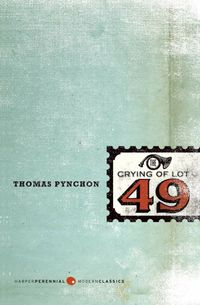
Thomas Pynchon wrote The Crying of Lot 49 in 1966. The story follows Oedipa Maas, a California housewife, as she becomes entangled in a complex and bewildering conspiracy. Invararity’s estate names Oedipa the executor of his estate. As she delves into her role, she discovers a series of puzzling and interconnected clues that lead her on a surreal and convoluted journey. Oedipa’s investigation takes her into a world of enigmatic underground postal systems, secret societies, and strange encounters with eccentric...
King Lear is a tragic play by William Shakespeare, believed to have been written between 1603 and 1606. The play tells the story of an aging King Lear who decides to divide his kingdom among his three daughters. But the consequences of this decision lead to a series of tragic events. Act I Act I introduces the characters and sets the stage for conflicts that drive the rest of the play. King Lear decides to divide his kingdom among his...
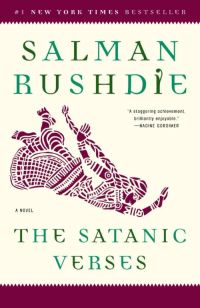
The Satanic Verses is a novel written by Salman Rushdie and published in 1988. The story revolves around two main characters, Gibreel Farishta and Saladin Chamcha, whose lives become intertwined in a series of surreal and fantastical events. The novel begins with a plane explosion over the English Channel, in which Gibreel and Saladin miraculously survive. However, their bodies undergo a transformation, blurring the boundaries between reality and imagination. Gibreel starts experiencing vivid dreams and visions, while Saladin develops physical...
William Boyd wrote and published Any Human Heart in 2002. It is a fictional autobiography that follows the eventful life of the protagonist, Logan Mountstuart, during the 20th century. Boyd presents the narrative through Logan’s journal, which Logan keeps throughout his life. The novel spans various periods and locations, offering a panoramic view of historical events. These events include World War I, the Spanish Civil War, World War II, and the Swinging Sixties. Boyd portrays Logan as a complex and...
In 2007 Anthony Grayling external link (Wikipedia bio) wrote Against All Gods, a collection of polemical essays attacking religion. In To Set Prometheus Free he develops those themes more comprehensively. He unpacks the claims and arguments of religious apologists. He summarizes the views of his fellow secularist Bertrand Russell. In particular, he details the controversy over ‘Intelligent Design’ and outlines his personal, naturalistic worldview. In To Set Prometheus Free , Grayling robustly calls for humanity to choose deliverance from religion....
Set in the early 19th century, Traveler of the Century follows the travels of Hans, a young German traveler and translator who arrives in the fictional city of Wandernburg. Hans becomes acquainted with a diverse cast of characters, including intellectuals, revolutionaries, and aristocrats, each representing different facets of society. As Hans delves deeper into the city’s social and intellectual circles, he becomes involved in discussions. He debates on a wide range of topics, such as politics, love, literature, and human...
“Paterson” is a long poem written by American modernist poet William Carlos Williams and published in five parts between 1946 and 1951. Williams names the poem “Paterson,” as Patterson, NJ is where he lived and worked as a doctor. The poem is a sprawling and ambitious work that was published in four parts and tend in my reading to go from great (Book 1) to so-so (Book 2), and on downward in overal quality. Just a fragment from the first...